










Breaking News
 Communism is SO attractive to the elite because it gives them ALL OF THE POWER...
 First the fake medical degrees, now fake regular degrees!
 One of Wall Street's Best Hedge Funds Just Blew a 44% Gain Because of AI Bets
 Iran and Pakistan are mass deporting millions of Afghans back to Afghanistan.
Top Tech News
 Anduril's plan to save US sub edge from China's undersea surge
 Researchers Develop AI 'Mind-Reading' Tool That Reconstructs What Your Eyes See
 Video: Dexterous robot hand learns the delicate art of silk embroidery
 The computer that can read your mind:
 Seven apps. One craft
 SHOCK CASE REPORT: Advanced Alzheimer's Patient Regains Speech, Memory, Mobility...
 Most artificial limbs rely on silicone or plastic to mimic human hands.
 Flying cell tower beams phone signal to Japan from 10 miles up
 Chinese Commercial Reactor Achieves Nuclear Fusion with Clean Hydrogen-Boron Fuel
 Palmer Luckey: Autonomous Weapons Are Ancient and Why Anduril Won't Build Humanoids | EP #295



Sub-$40,000 personal eVTOL could be in buyers' hands later this year
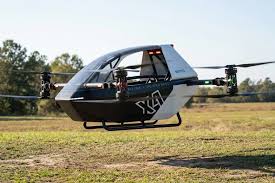
Unveiled this week at CES 2026 in Las Vegas, the Rictor X4 is a single-passenger eVTOL (electric vertical take-off and landing) aircraft driven by eight motor/propeller units mounted on four arms. Those carbon fiber arms and 63-inch (160-cm) props fold in when not in use, allowing the X4 to be transported in the back of a pickup truck.
Not only can the aircraft take off and land vertically like a helicopter, it can also fly forward at a top speed of 80 km/h (50 mph).
That said, it's limited to a flight time of 20 minutes per battery-charge and a 100-kg (220.5-lb) payload capacity, including pilot. According to Rictor's parent company Kuickwheel Technology, it's designed for "light aerial mobility." Essentially, it's a commuter.