










Breaking News
SEMI-NEWS/SEMI-SATIRE: January 11, 2026 Edition
 "Appalling": Debanking Explodes To Record High In Britain
 MTG explodes in astonishing f-bomb laden tirade as Trump orders Secret Service probe:
 "World's Criminals On Notice": Trump's Gunboat Diplomacy Seizes Another Tanker In
Top Tech News
 World's most powerful hypergravity machine is 1,900X stronger than Earth
 New battery idea gets lots of power out of unusual sulfur chemistry
 Anti-Aging Drug Regrows Knee Cartilage in Major Breakthrough That Could End Knee Replacements
 Scientists say recent advances in Quantum Entanglement...
 Solid-State Batteries Are In 'Trailblazer' Mode. What's Holding Them Up?
 US Farmers Began Using Chemical Fertilizer After WW2. Comfrey Is a Natural Super Fertilizer
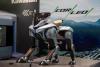 Kawasaki's four-legged robot-horse vehicle is going into production
 The First Production All-Solid-State Battery Is Here, And It Promises 5-Minute Charging
 See inside the tech-topia cities billionaires are betting big on developing...
 Storage doesn't get much cheaper than this


Tesla Dominated EVs For Years. BYD Just Left It In The Dust
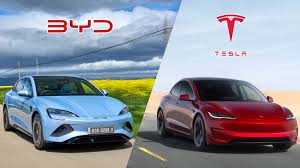
The world has a new king of electric-vehicle sales.
On Friday, preliminary sales data reveal that Chinese juggernaut BYD sold more EVs than Tesla in 2025, the first time in well over a decade that any competing automaker has outpaced Elon Musk's company.
According to Tesla's latest figures, the company sold 1.64 million EVs worldwide in 2025, down 9% from the 1.79 million EVs it shipped in 2024. But BYD edged ahead by more than 600,000 cars, closing 2025 with 2.26 million EVs sold.
Previously, BYD has outpaced Tesla in global car sales because it also manufactures plug-in hybrids, whereas Tesla does not, thereby offering a broader appeal beyond its core EV base. But 2025's sales result is the first time—at least since the days of the original Nissan Leaf—that Tesla has been overtaken in purely electric sales.
The result may not be surprising, given that no carmaker is guaranteed to stay ahead of the pack forever. But it's worth unpacking just how this happened and what it means for the broader global EV race.
While Musk may have once scoffed at BYD's products, the Shenzhen-based firm has experienced a meteoric rise in recent years, even if it's one that Americans have not seen because its cars are not currently sold in the United States. The company, which got its start making mobile phone batteries before branching into cars, has dramatically expanded its lineup of EVs and hybrids since the 2020s began. It's also followed a Lexus-like playbook, launching new luxury brands like Yangwang and Denza.
And perhaps more than any other Chinese automaker right now, BYD is successfully undertaking a major international expansion. BYD has been outselling Tesla in Europe for months, tailoring its offerings to local tastes with cars like a new plug-in hybrid estate wagon.
It has developed a five-minute EV fast-charging platform, which it is also bringing to Europe this year, and building out European manufacturing too. Plants in Turkey and southern Hungary are slated to open in the next few months, and Spain is eyed for a third one. Meanwhile, BYD is also moving quickly in Latin America, Japan (including with an electric kei car) and the Middle East. So even as sales slow in its native China amid a brutal price war, BYD has been able to offset any losses with its international presence.
By contrast, Tesla openly admits that it's less interested in selling cars and more focused on delivering a future centered around autonomous Robotaxis. While the Tesla Model Y remains a global best-seller—the best-selling car in 2025, according to unsubstantiated claims—the rest of the company's lineup isn't much different from what it was five years ago. The Cybertruck isn't available everywhere and has seen a precipitous sales decline, and the only Tesla EVs that move in real volumes are the Model Y and Model 3. A new Roadster sports car has been repeatedly backburnered, but when or if it debuts, Tesla has said it's the last car it will make with a steering wheel before autonomy defines everything else it does.