










Breaking News
 Welfare Is Immoral in Any Country
 Hair-Raising Case: White Baltimore Arts Executive Fired For Wearing Cornrows
 The Honda NSX rises ... with more horsepower and carbon fiber
 'Hypocrite' Hillary Clinton is slammed for her comments on Fort Hood killer's...
Top Tech News
 Seven apps. One craft
 SHOCK CASE REPORT: Advanced Alzheimer's Patient Regains Speech, Memory, Mobility...
 Most artificial limbs rely on silicone or plastic to mimic human hands.
 Flying cell tower beams phone signal to Japan from 10 miles up
 Chinese Commercial Reactor Achieves Nuclear Fusion with Clean Hydrogen-Boron Fuel
 Med Beds Just Took a MASSIVE Step Forward, Healing People in Days!
 Palmer Luckey: Autonomous Weapons Are Ancient and Why Anduril Won't Build Humanoids | EP #295
 A laser just photographed objects through six feet of concrete
 Elon Musk's Next-Gen Motor Destroy Entire EV Industry
 China's disputed satellite refueling heralds new space war era



Anti-Aging Drug Regrows Knee Cartilage in Major Breakthrough That Could End Knee Replacements
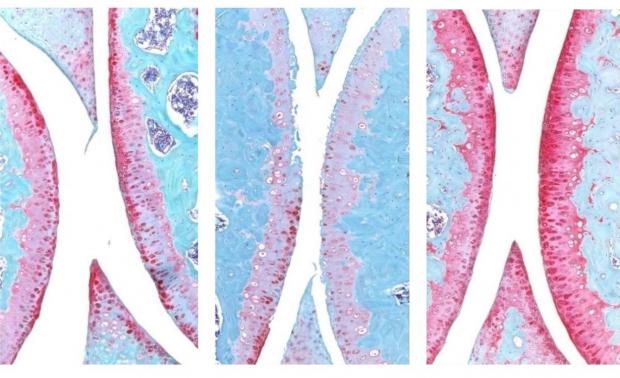
The treatment also prevented the development of arthritis after knee injuries such as ACL tears often experienced by athletes or recreational exercisers. An oral version of the treatment is already in clinical trials with the goal of treating age-related muscle weakness.
Samples of human tissue from knee replacement surgeries in the joint also responded to the treatment by making new, functional cartilage, a result which suggests that in the future, knee and hip replacement may be totally unnecessary.
The treatment directly targets the cause of osteoarthritis, a degenerative joint disease that affects one of every five adults in the United States and is estimated to cost about $65 billion in direct health care costs each year. Prevention or a replacement is the only strategy society-wide, as no drug can slow down or reverse the disease.
The protein blocked by the injection, 15-PGDH, is a master regulator of aging, and is in fact termed a "gerozyme" due to its increase in prevalence as the body ages. Gerozymes also drive the loss of tissue function. They are a major force behind age-related loss of muscle strength in mice.
Blocking the function of 15-PGDH with a small molecule results in an increase in old animals' muscle mass and endurance. Conversely, expressing 15-PGDH in young mice causes their muscles to shrink and weaken.
In bone, nerve, and blood cells, regeneration is due to increases in the proliferation and specialization of tissue-specific stem cells. However, cartilage-generating chondrocytes change their patterns of gene expression to assume a more youthful state without the involvement of stem cells.
"This is a new way of regenerating adult tissue, and it has significant clinical promise for treating arthritis due to aging or injury," said Helen Blau, PhD, professor of microbiology and immunology. "We were looking for stem cells, but they are clearly not involved. It's very exciting."
"Millions of people suffer from joint pain and swelling as they age," said Blau's colleague and co-senior author, Nidhi Bhutani, a PhD and associate professor of orthopedic surgery. "It is a huge unmet medical need. Until now, there has been no drug that directly treats the cause of cartilage loss. But this gerozyme inhibitor causes a dramatic regeneration of cartilage beyond that reported in response to any other drug or intervention."