










Breaking News
 BREAKING EXCLUSIVE: Kyle Rittenhouse Warns The Left Is Preparing To Stage A False Flag To Blame...
 The Biggest Grid We Escaped (It Wasn't Power)
 Both Sides Gear Up For "War" As An Internal Revolution Begins To Erupt In The United State
 The Good News Is People Are Realizing We're On Our Own
Top Tech News
 World's most powerful hypergravity machine is 1,900X stronger than Earth
 New battery idea gets lots of power out of unusual sulfur chemistry
 Anti-Aging Drug Regrows Knee Cartilage in Major Breakthrough That Could End Knee Replacements
 Scientists say recent advances in Quantum Entanglement...
 Solid-State Batteries Are In 'Trailblazer' Mode. What's Holding Them Up?
 US Farmers Began Using Chemical Fertilizer After WW2. Comfrey Is a Natural Super Fertilizer
 Kawasaki's four-legged robot-horse vehicle is going into production
 The First Production All-Solid-State Battery Is Here, And It Promises 5-Minute Charging
 See inside the tech-topia cities billionaires are betting big on developing...
 Storage doesn't get much cheaper than this


The Year Ahead in Sino-American Relations
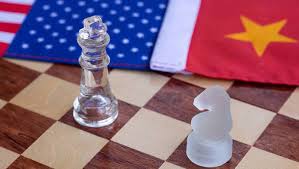
While Beijing's growth in relative power—economic, technological, and military—continues, it is not aimed at "taking over the world." Instead, it reflects a pragmatic pursuit of stability and influence in Asia. Washington would benefit from strategic empathy, recognizing China's core concerns to avoid counterproductive escalations that could harm both nations in the long-term.
With that said, here's what to be on the lookout for in Sino-American relations in 2026.
A hallmark of the U.S.-China rivalry since Donald Trump first took office in 2017, the current round of trade war enters 2026 on shaky ground following the one-year truce brokered in October 2025 during Presidents Trump and Xi's meeting in Busan, South Korea. This agreement paused escalating tariffs—peaking at 145% on some Chinese goods and 125% on American products earlier in 2025—and committed China to resuming purchases of American soybeans (twelve million tons by year's end—though American farmers are apparently in need of another bailout) while easing rare earth export curbs. In return, Washington suspended expansions of export controls on advanced tech affiliates.
Bilateral trade, which plummeted 44% year-on-year to $324 billion in the first nine months of 2025, could stabilize if the truce holds, benefiting U.S. farmers and manufacturers reliant on Chinese components.
Yet, fractures are already apparent. No formal written agreement has materialized two months post-summit, leaving commitments vague, vulnerable to misinterpretation, and doing little to dissipate the regime uncertainty plaguing the planning of businesses.
Beijing, focused on resilience, has diversified exports and boosted domestic consumption, reducing reliance on the U.S. market. If the truce unravels, expect tit-for-tat measures, but China's strategic patience could expose U.S. domestic pressures, pushing Trump toward concessions to avoid economic fallout ahead of midterms.
Longer-term, this dynamic underscores the counterproductive nature of Washington's escalations. The growth of Beijing's relative power in Asia is virtually inevitable, but alienating the region with trade wars only accelerates this process, harming American competitiveness without altering the regional balance.
While tensions have decreased over the past year, particularly when measured against the trade and economic categories, security remains the most dangerous and volatile arena, with Taiwan and the South China Sea as perennial hotspots. And while improvements have been made, things have been a mixed bag.
On the one hand, the Trump administration's National Security Strategy has toned down its language on China, and the administration has avoided the outlandish statements the Joe Biden administration was perpetually walking back; until recently, Trump hadn't approved any arms sales to Taiwan since taking office; and Republicans and Democrats alike have avoided the high level visits that occurred multiple times over the course of the previous administration. At the same time, Beijing has kept its objections to U.S. naval operations in its area pro forma and has continued to signal its desire to work with Washington to keep disputes over conflicting maritime claims beneath the threshold.
On the other, frankly less promising, hand, there have been plenty of causes for concern on both sides. In Washington, there is little appetite for revisiting the key provisions of the Taiwan Relations Act that mandate arming the island, a longstanding point of continuing friction. U.S. troops are still present on Taiwan and the offshore islands, some of which are within sight of the mainland; having spent the previous several years busily clarifying commitments to allies such as the Philippines regarding their claims to sandy spits in the South China Sea, clashes that could draw Washington into direct conflict with Beijing have continued. On that note, besides Chinese coast guard harassment of Philippine fishing vessels, Beijing has declared a new "nature reserve" at Scarborough Shoal institutionalizing its claims. While People Liberation Army (PLA) and People's Liberation Army Navy (PLAN) incursions since Taiwanese President William Lai's 2024 inauguration have continued, highlighting Beijing's resolve to counter perceived independence moves, Beijing recently conducted its second major blockade simulation around Taiwan ("Justice Mission 2025").