










Breaking News
 Tucker's Brother Buckley Carlson on Dogs, Childhood, Nicotine, Frank Luntz and America's...
 Rumble introduces crypto wallet with Tether, allowing tips in BTC, USDT, XAUT
 Stolen Soil and Corporate Welfare: The Global Scam of 'Feeding the World'
 Maduro on Trial & Trump's 'Donroe Doctrine'
Top Tech News
 Superheat Unveils the H1: A Revolutionary Bitcoin-Mining Water Heater at CES 2026
 World's most powerful hypergravity machine is 1,900X stronger than Earth
 New battery idea gets lots of power out of unusual sulfur chemistry
 Anti-Aging Drug Regrows Knee Cartilage in Major Breakthrough That Could End Knee Replacements
 Scientists say recent advances in Quantum Entanglement...
 Solid-State Batteries Are In 'Trailblazer' Mode. What's Holding Them Up?
 US Farmers Began Using Chemical Fertilizer After WW2. Comfrey Is a Natural Super Fertilizer
 Kawasaki's four-legged robot-horse vehicle is going into production
 The First Production All-Solid-State Battery Is Here, And It Promises 5-Minute Charging
 Storage doesn't get much cheaper than this


Australia Joins The Rare Earth Reserve Rush
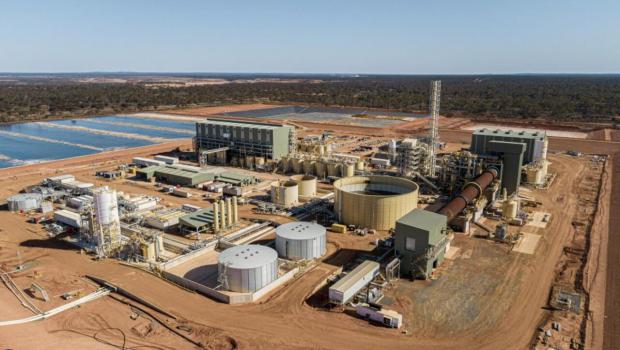
Bloomberg reports that the initial stockpile will target rare earths, antimony and gallium, according to Treasurer Jim Chalmers, Resources Minister Madeleine King and Trade Minister Don Farrell. As one of the largest rare-earth producers outside China, Australia hopes the move will reduce Beijing's leverage over critical resources.
Critical minerals have become a flashpoint in global trade disputes, particularly after China used its market dominance during trade tensions with the US. That has driven other nations to see local production and reserves as strategic priorities.
"Developing the Strategic Reserve is another important step in Australia leading on critical minerals globally," Chalmers said. The stockpile will ensure "Australia is at the center of efforts to build stable and reliable supply chains for our international partners."
Mining stocks rose on the news, with Lynas Rare Earths climbing up to 6.5% and Larvotto Resources jumping 8.8%. Larvotto, which is developing one of the world's largest antimony projects, welcomed the move.
"The federal government is leading from the front on this, and we're extremely happy antimony is one of the focuses," said CEO Ron Meeks. "We will produce 7% of the world's antimony, so we will be one of the largest suppliers. We'll start production in August."
The strategy follows China's recent rare-earth export restrictions on Japan and builds on last year's US-Australia agreement to expand American access to critical minerals, a deal covering roughly A$13 billion in projects. Officials also say the reserve could help stabilize prices and shield producers from future market downturns driven by cheap Chinese supply.
Rare earths are vital for permanent magnets used in defense and medical systems, while antimony supports electronics and flame retardants, and gallium is essential for advanced semiconductors in radar and communications.
Of course, we have been documenting the "rare earth revolution" since summer of last year, when we wrote that China's export controls on key rare earth elements—especially the "heavy" ones used in high-performance permanent magnets—were creating shortages and price distortions outside China, exposing how dependent the world is on China for mined, refined, and magnet-ready material.