










Breaking News
 Welfare Is Immoral in Any Country
 Hair-Raising Case: White Baltimore Arts Executive Fired For Wearing Cornrows
 The Honda NSX rises ... with more horsepower and carbon fiber
 'Hypocrite' Hillary Clinton is slammed for her comments on Fort Hood killer's...
Top Tech News
 Seven apps. One craft
 SHOCK CASE REPORT: Advanced Alzheimer's Patient Regains Speech, Memory, Mobility...
 Most artificial limbs rely on silicone or plastic to mimic human hands.
 Flying cell tower beams phone signal to Japan from 10 miles up
 Chinese Commercial Reactor Achieves Nuclear Fusion with Clean Hydrogen-Boron Fuel
 Med Beds Just Took a MASSIVE Step Forward, Healing People in Days!
 Palmer Luckey: Autonomous Weapons Are Ancient and Why Anduril Won't Build Humanoids | EP #295
 A laser just photographed objects through six feet of concrete
 Elon Musk's Next-Gen Motor Destroy Entire EV Industry
 China's disputed satellite refueling heralds new space war era



What Are the Differences Between Yellow Chicken and White Chicken?
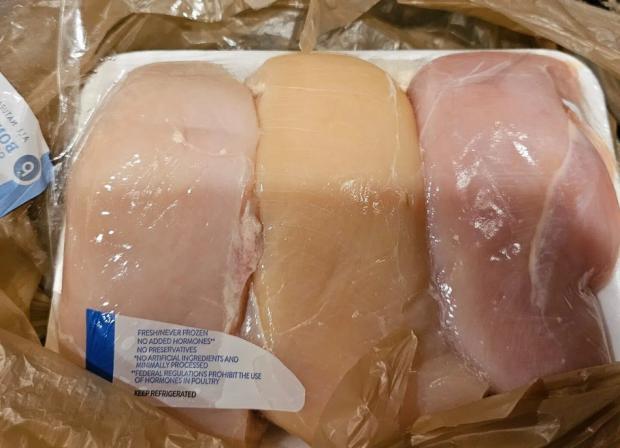
I've done it. A lot of us have. And if you're like me, you've probably asked yourself, "Does chicken color mean anything? Is one fresher? Healthier? Tastier?" Spoiler alert: the answer's more interesting than you'd expect.
What Chicken Color Really Tells You
Let's get the obvious out of the way - yes, chicken color does tell you something. But it's not about quality in the way you might think. There's a long-standing misconception that white chicken is somehow "cleaner" or better, and that yellow chicken looks suspicious (or the other way around depending on where you grew up). Truth is, the color difference mostly comes down to diet, breed, and how the chicken was raised.
White chicken typically comes from factory-farmed birds raised indoors on commercial feed, usually consisting of grains like corn, wheat, and soy. These chickens grow rapidly, don't get much exercise, and aren't exposed to the outdoors. The meat ends up being pale pink or white, sometimes with a slightly bluish tint (especially if it's cold). This is the kind of chicken you'll see in most grocery stores.