










Breaking News
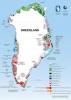 Beneath Greenland's vast ice sheet lies one of Earth's most ancient geological treasures:
 Remember the names of every Republican member of Congress who votes no today...
 The Price of Safety
 Q: What is a Conspiracy Theory that you believe in?
Top Tech News
 Superheat Unveils the H1: A Revolutionary Bitcoin-Mining Water Heater at CES 2026
 World's most powerful hypergravity machine is 1,900X stronger than Earth
 New battery idea gets lots of power out of unusual sulfur chemistry
 Anti-Aging Drug Regrows Knee Cartilage in Major Breakthrough That Could End Knee Replacements
 Scientists say recent advances in Quantum Entanglement...
 Solid-State Batteries Are In 'Trailblazer' Mode. What's Holding Them Up?
 US Farmers Began Using Chemical Fertilizer After WW2. Comfrey Is a Natural Super Fertilizer
 Kawasaki's four-legged robot-horse vehicle is going into production
 The First Production All-Solid-State Battery Is Here, And It Promises 5-Minute Charging
 Storage doesn't get much cheaper than this


Minnesota Stealing: Reason To Rethink Government Welfare
But the 800-pound elephant/question goes unasked: Why is government in the business of welfare in the first place?
Where in the Constitution does it permit the federal government to extract money from taxpayers for charity?
Years ago, I worked full time one summer as a "loaned executive" for the United Way of Cleveland. My job was to meet with CEOs of companies, tell them the story of the United Way and hopefully arrange for me to make a presentation to the company's employees, take questions and then ask for donations.
Through this process, the United Way raised and donated money to other nonprofits involved in community activities such as preschooling, counseling "at-risk" youths, after-school academic programs, care for the sick and elderly and youth sports programs, among other local initiatives. There was a rigorous application process before the nonprofit could receive any money. There was regular and rigorous follow-up to make sure the money was spent properly and efficiently based on previously agreed-on criteria. If, after receiving funds, the nonprofit did not meet these goals, it lost its funding.
The reason for the rigorous review and follow-up was simple. Donors are more likely to give if they feel their money is being spent effectively to achieve the promised result. In fact, "How do I know my money will be spent properly?" was my most frequently asked question.
Because so many worked for the United Way as volunteers, as I did, nearly 90 percent to 95 percent of each dollar donated reached the intended beneficiaries. Government welfare programs, riddled with waste, fraud and abuse, do not come close to this level of efficiency.
Government welfare represents what economist Milton Friedman called the least efficient, least effective and most wasteful spending: somebody else's money on somebody else. Through most of our country's history, charity was people to people—house of worship to people, nonprofit to people—not government to people.