










Breaking News
 Episode 470: A FOOD CRISIS, AUTISM COMMUNICATION RIGHTS, AND STEM CELL...
 A Case For Jesus Christ - Lee Strobel | PBD #770
 Situation with the war has finally made me use fuel stabilizer for my diesel fuel.
 Could the War Trigger a Financial Reset & Usher in a CBDC Beast System? w/ Micah Haince
Top Tech News
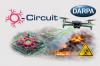 DARPA O-Circuit program wants drones that can smell danger...
 Practical Smell-O-Vision could soon be coming to a VR headset near you
 ICYMI - RAI introduces its new prototype "Roadrunner," a 33 lb bipedal wheeled robot.
 Pulsar Fusion Ignites Plasma in Nuclear Rocket Test
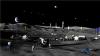 Details of the NASA Moonbase Plans Include a Fifteen Ton Lunar Rover
 THIS is the Biggest Thing Since CGI
 BACK TO THE MOON: Crewed Lunar Mission Artemis II Confirmed for Wednesday...
 The Secret Spy Tech Inside Every Credit Card
 Red light therapy boosts retinal health in early macular degeneration
 Hydrogen-powered business jet edges closer to certification


Watch: World's fastest drone hits 408 mph to reclaim speed record
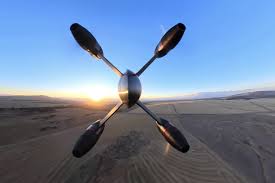
The new record surpassed the 626 km/h (389 mph) flight set a month earlier by Australian engineer Benjamin Biggs. Before Biggs, Luke and Mike Bell had clocked a record 480 km/h (298 mph) with their Peregreen 2 drone in June 2024, and 585 km/h (363.5 mph) with their Peregreen 3 in October 2025. The latest iteration has now brought the record back to the Bells in what has been an intensely competitive race.
The Peregreen V4 quadcopter was built by Luke Bell, an aerial videographer based in Cape Town, South Africa, with help from his father, Mike. As the name suggests, this is the fourth iteration of their custom drone, the result of more than two years of improvements on the first version. They've also built a separate solar-powered drone that flies as long as there's sunshine, but at significantly less speed.
Building the drone
3D printing enabled the father-son duo to rapidly build prototypes and switch things up when needed. The Peregreen V4 was made with Bambu Lab's H2D high-speed dual-nozzle printer, allowing the team to combine different materials in a single print. This combination came in handy, as different materials were needed for sections like the drone's tail and camera mount.
The Peregreen V4 also sported new design and hardware upgrades. The Bells selected T-Motor 3120 brushless motors for improved reliability, paired with 900-kV windings (up from 800-kV in the previous iteration) to increase rotational speed. The drone was also equipped with lithium-ion polymer batteries designed to deliver maximal power during the shortest time.
AirShaper, a 3D modeling platform, was to optimize their drone's exterior, creating a smoother body that reduced aerodynamic drag. Propeller blades were also reduced to 6 inches to achieve a better top speed.
Testing and flying
After experiencing difficulty capturing the Peregreen V4 in flight due to its small size and high speed, the team found a solution in the previous record breaker – using the camera of the Peregreen 3 to video the flights.