










Breaking News
 Solar Just Took a Huge Leap Forward!- CallSun 215 Anti Shade Panel
 Offline Knowledge Hubs: Building Your Own Digital Survival Library
 Elon's likely to win his lawsuit against Sam Altman for stealing OpenAI
 US Unveils AI Drone Swarm Built to Annihilate Targets
Top Tech News
 NASA announces strongest evidence yet for ancient life on Mars
 Caltech has successfully demonstrated wireless energy transfer...
 The TZLA Plasma Files: The Secret Health Sovereignty Tech That Uncle Trump And The CIA Tried To Bury
 Nano Nuclear Enters The Asian Market
 Superheat Unveils the H1: A Revolutionary Bitcoin-Mining Water Heater at CES 2026
 World's most powerful hypergravity machine is 1,900X stronger than Earth
 New battery idea gets lots of power out of unusual sulfur chemistry
 Anti-Aging Drug Regrows Knee Cartilage in Major Breakthrough That Could End Knee Replacements
 Scientists say recent advances in Quantum Entanglement...
 Solid-State Batteries Are In 'Trailblazer' Mode. What's Holding Them Up?



Cucumber and celery juices: Decoding the hydration and health benefits
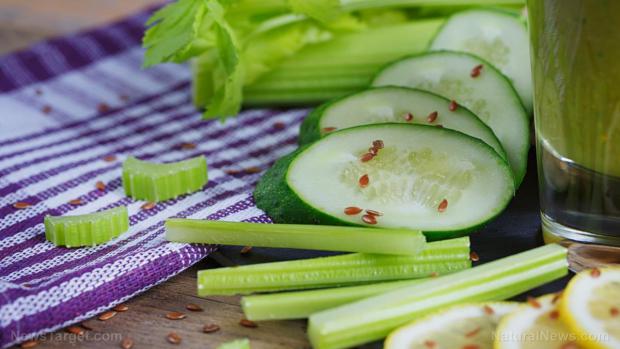
• Cucumber juice offers superior hydration due to its 96% water content and mild taste, while celery juice provides more electrolytes like sodium and potassium.
• Juicing removes most fiber, meaning neither juice significantly supports gut health compared to eating whole vegetables.
• Both juices deliver anti-inflammatory compounds—apigenin in celery and cucurbitacins in cucumber—with measurable benefits for inflammation and skin health.
• For maximum benefit, fresh juice should be consumed immediately; storing it degrades valuable enzymes and phytonutrients.
• The combination offers a science-backed, hydrating nutrient boost but should complement, not replace, a balanced diet rich in whole fruits and vegetables.
In the ever-evolving landscape of wellness trends, the humble green juice remains a constant. Among the most popular contenders are cucumber and celery juices, each touted by advocates for benefits ranging from deep hydration to systemic detoxification. But what does the nutritional science actually say about these verdant elixirs? For health-conscious individuals and busy families seeking efficient ways to boost nutrient intake, understanding the distinct advantages of each juice is key to making informed choices that align with personal health goals, from daily maintenance to supporting the body during healing.
Hydration showdown: Electrolytes vs. pure refreshment
When it comes to meeting daily fluid needs, both vegetables are exceptional choices due to their high water content—approximately 96% for cucumbers and 95% for celery. This makes their juices naturally hydrating. However, they achieve this hydration through different mechanisms. Cucumber juice, with its exceptionally high water percentage and mild, refreshing taste, is often easier to consume in larger volumes, providing efficient fluid replenishment. Celery juice, while slightly behind in pure water content, brings a significant advantage in electrolytes, particularly sodium and potassium, which are crucial for maintaining fluid balance, nerve function and muscle contractions. For those seeking post-workout rehydration or needing to replenish electrolytes naturally, celery juice has a distinct edge.