










Breaking News
 They're "Playing A Very Dangerous Game": Trump Slaps 10% Tariff On 8 European Countrie
 The Dam Has Burst In Silver And Gold...So Now What?
 Hegseth Takes "Sledgehammer" To Nation's Largest DEI Program
 FDA Removes Web Content Saying Cellphones Are Harmless - HHS Launches Study
Top Tech News
 Solar Just Took a Huge Leap Forward!- CallSun 215 Anti Shade Panel
 XAI Grok 4.20 and OpenAI GPT 5.2 Are Solving Significant Previously Unsolved Math Proofs
 Watch: World's fastest drone hits 408 mph to reclaim speed record
 Ukrainian robot soldier holds off Russian forces by itself in six-week battle
 NASA announces strongest evidence yet for ancient life on Mars
 Caltech has successfully demonstrated wireless energy transfer...
 The TZLA Plasma Files: The Secret Health Sovereignty Tech That Uncle Trump And The CIA Tried To Bury
 Nano Nuclear Enters The Asian Market
 Superheat Unveils the H1: A Revolutionary Bitcoin-Mining Water Heater at CES 2026
 World's most powerful hypergravity machine is 1,900X stronger than Earth



If Britain Bans X, How Far Will It Go To Block Free Speech?
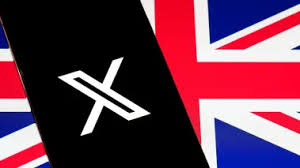
This is likely aimed at the social media site X.com after its AI assistant Grok allegedly generated inappropriate images. In the scope of the global news cycle and a further ban potentially on the table, the move couldn't be more poorly timed. It coincides with social media bans in socialist Tanzania and a sweeping Internet blackout by the Ayatollah of Iran. While Britain is not Iran, the direction of travel – using information control to manage dissent – bears uncomfortable similarities. Brits are justifiably worried: Is this the nail in the coffin of Britain's free speech?
This is likely aimed at the social media site X.com after its AI assistant Grok allegedly generated inappropriate images. In the scope of the global news cycle and a further ban potentially on the table, the move couldn't be more poorly timed. It coincides with social media bans in socialist Tanzania and a sweeping Internet blackout by the Ayatollah of Iran. While Britain is not Iran, the direction of travel – using information control to manage dissent – bears uncomfortable similarities. Brits are justifiably worried: Is this the nail in the coffin of Britain's free speech?
To make matters worse, Starmer's online censorship has gone even further under the new Online Safety Act. This new law is intended to protect young people from "harmful" speech but gives regulators sweeping powers to silence lawful but unpopular speech in the name of safety. An example of the British government's new stance on what is acceptable to discuss is a new taxpayer-funded online game. This game vilifies concerns over mass migration by giving the player a red extremism score, branding them as likely to be referred to the Prevent program, the UK anti-terror watchdog.
The fact that victims of a foreign grooming gang investigation can be dismissed as "white trash" is a disgrace – made all the more striking as senior ministers simultaneously talk about banning the most pro-free-speech social media platform, where stories like this gain greater public consciousness.
Just as the UK government has brought in these speech laws, the people have become aware that they are less free. Self-censorship and caution when speaking one's mind are common, as individuals do not know the potential consequences of expressing their opinions. An opinion expressed by the Conservative Party or Reform Party could potentially create trouble or unnecessary harm if voiced by a civilian. Examples of this are easy to find, from Graham Linehan, who was arrested by armed police upon arriving in the UK from Arizona, to Deborah Anderson, an American cancer patient harassed by police in her own home in Britain over a post on X.