










Breaking News
 BREAKING EXCLUSIVE: Nick Shirley Just Dropped Part 3 Of His Somali Fraud Investigation!
 After Narrowly Escaping Death At The Hands Of A Communist Minneapolis Lynch Mob,...
 Silver Surges To $95/oz - Top Experts Now Predict $300/oz By The End Of The Year!!!
 As Davos Convenes, Deference to Trump Has Replaced Everything
Top Tech News
 Solar Just Took a Huge Leap Forward!- CallSun 215 Anti Shade Panel
 XAI Grok 4.20 and OpenAI GPT 5.2 Are Solving Significant Previously Unsolved Math Proofs
 Watch: World's fastest drone hits 408 mph to reclaim speed record
 Ukrainian robot soldier holds off Russian forces by itself in six-week battle
 NASA announces strongest evidence yet for ancient life on Mars
 Caltech has successfully demonstrated wireless energy transfer...
 The TZLA Plasma Files: The Secret Health Sovereignty Tech That Uncle Trump And The CIA Tried To Bury
 Nano Nuclear Enters The Asian Market
 Superheat Unveils the H1: A Revolutionary Bitcoin-Mining Water Heater at CES 2026
 World's most powerful hypergravity machine is 1,900X stronger than Earth



Trudeau's Emergency Powers Ruled ILLEGAL
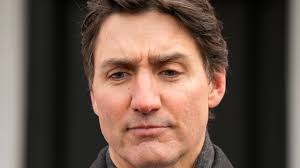
This ruling, issued on Friday, rejected the federal government's challenge to a 2024 lower court judgment that declared former Prime Minister Justin Trudeau's invocation of the act unjustified and a violation of demonstrators' rights under the Canadian Charter of Rights and Freedoms.
The three-judge panel emphasized that, despite the inconvenience and disruption caused by the protests, these events did not rise to the level of a genuine threat to national security. The judges stated that cabinet lacked sufficient reasonable grounds to conclude such a threat existed, thereby failing to meet the strict statutory requirements for invoking the legislation.
"There was no evidence that the lives, health or safety of the people living in Ottawa were endangered (as annoying, stressful and concerning as the protests were)," the decision noted.
Origins of the Case
The case originated from legal challenges brought by organizations including the Canadian Civil Liberties Association (CCLA) and the Canadian Constitution Foundation, which contested the government's declaration of a public order emergency.
In his 2024 ruling, retired Federal Court Justice Richard Mosley found the government's decision deficient in rationale, openness, and clarity.
During the appeal hearing last February, government lawyers contended that the lower court had applied retrospective judgment unfairly and downplayed the risks. They maintained that the protests represented a serious security issue and that the measures implemented under the Emergencies Act were limited, reasonable, and short-lived.
However, the appeal court sided with Justice Mosley's assessment, highlighting a lack of thoroughness in processes such as the freezing of bank accounts, where financial institutions were expected to rely on potentially unreliable sources, including media reports or social media information.
The ruling also criticized the government's broad interpretation of "threats to the security of Canada," warning that it could potentially suppress legitimate protests targeting infrastructure such as pipelines or railways.
Howard Sapers, executive director of the CCLA, described the outcome as a significant and landmark victory for the rule of law and the protection of rights for all Canadians. He noted that while the exceptional authorities granted under the Emergencies Act might be warranted in truly dire situations, they also carry serious risks to democracy and the rule of law.