










Breaking News
 Putin and Trump Are About to Change EVERYTHING... and China Knows It
 Fined for Profit: How Government Turned Punishment Into a Profit Center
 Bad LFP Cell? Check THIS Before You Replace It
 Castor Oil for Your Face (Nature's Botox)
Top Tech News
 Bioinspired robot airdrops into remote waters via morphing wing-sail
 Anduril interceptor adapts to emerging threats via swappable stages
 I Built a Website to Expose Solar and Battery Scams
 Whistleblower Issues Dire Warning: Rogue AI, Hacking Nuclear Programs...
 Multi-material insulation delivers up to 10,000 x the stiffness
 Anduril's plan to save US sub edge from China's undersea surge
 Researchers Develop AI 'Mind-Reading' Tool That Reconstructs What Your Eyes See
 Video: Dexterous robot hand learns the delicate art of silk embroidery
 The computer that can read your mind:
  Seven apps. One craft


New Electric 'Donut Motor' Makes 856 HP but Weighs Just 88 Pounds
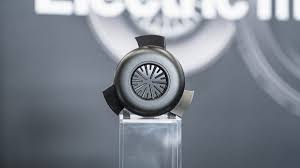
Look out, Koenigsegg, there might be a new king of the electric motor hill. British electric vehicle technology brand Donut Lab has a new EV motor deliciously named the "Donut Motor," and it packs 856 horsepower. Even better, it weighs just 88 pounds. That's a better power-to-weight ratio than Koenigsegg's Dark Matter motor, which weighs about the same but makes 822 horsepower.
That's a small difference but the Donut Motor claims to make a lot more torque. According to Donut Labs, in its automotive spec (there are truck and bike applications as well), this new motor can make as much as 3,172 pound-feet of torque. That seems a bit extreme and I'm wondering what sort of lab-specific circumstances are needed to make that much twist. But even when drastically reduced for road use and actually applied to the wheels, it should still be an eye-watering figure.
Perhaps more interesting isn't the maximum power output of Donut Labs' motor but that it's integrated into the wheel and tire. An 88-pound integrated wheel motor does sound too heavy, but the motor would be scaled down drastically for street applications. Because unless you have a death wish, cars don't need 856 horsepower per wheel. Much smaller, lighter versions of the motor can be integrated into the wheel and still make plenty of power for even the fastest-performance cars.
"Great unsprung mass has been the most important reason why everyone hasn't used motors integrated with the tire in their vehicles. Through the torque and power density we've now achieved, the relative weight of the motor is so small that for the first time the unsprung mass is insignificant," said Donut Lab CEO Marko Lehtimäki.
Smaller versions of the integrated wheel Donut Motor are already used in Verge motorcycles, where weight matters even more than in cars. So four-wheeled applications should theoretically be even easier to integrate. Donut Labs even claims that this new motor is up to 50% cheaper to make than conventional electric motors, so if Donut can get these into the hands of more automakers, they can be game changers for small, more affordable EVs.