










Breaking News
 Putin and Trump Are About to Change EVERYTHING... and China Knows It
 Fined for Profit: How Government Turned Punishment Into a Profit Center
 Bad LFP Cell? Check THIS Before You Replace It
 Castor Oil for Your Face (Nature's Botox)
Top Tech News
 Bioinspired robot airdrops into remote waters via morphing wing-sail
 Anduril interceptor adapts to emerging threats via swappable stages
 I Built a Website to Expose Solar and Battery Scams
 Whistleblower Issues Dire Warning: Rogue AI, Hacking Nuclear Programs...
 Multi-material insulation delivers up to 10,000 x the stiffness
 Anduril's plan to save US sub edge from China's undersea surge
 Researchers Develop AI 'Mind-Reading' Tool That Reconstructs What Your Eyes See
 Video: Dexterous robot hand learns the delicate art of silk embroidery
 The computer that can read your mind:
  Seven apps. One craft


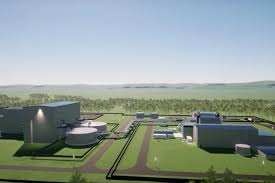
US advances nuclear revival with approval of Natrium Gen IV reactor
Once a global leader in nuclear power, the US created many of the Generation I and Generation II reactor designs on which much of today's nuclear fleet is based. However, in the 1970s there was a major shift in American civilian nuclear policy. Nuclear fuel reprocessing and fast breeder reactor programs were terminated, the environmental movement – broadly hostile to nuclear power – gained influence over federal policy, and the Three Mile Island accident in 1979 severely damaged public confidence in nuclear energy.
As a result, the Energy Reorganization Act of 1974 was passed, followed by the Kemeny Commission investigation after the Three Mile Island incident in 1979. Control of the US civilian nuclear program shifted from the Atomic Energy Commission to the newly formed Nuclear Regulatory Commission (NRC), whose mandate focused primarily on safety rather than the promotion of nuclear power development.
The combination of increasingly complex regulations, long approval timelines, high costs, and frequent legal challenges from activist groups dramatically slowed new nuclear projects.
As a result, no new reactors were built in the United States for decades, and the last new reactor application approval occurred roughly ten years ago.
Now, the US government is looking to revive the nuclear sector with a more streamlined regulatory process aimed at encouraging the construction of new plants while maintaining safety standards.
A key example is the Natrium Demonstration Project for Kemmerer Power Station Unit 1 in Kemmerer, Wyoming. The plant is being developed by US SFR Owner, LLC (USO), a special-purpose vehicle and wholly owned subsidiary of TerraPower. A participant in the US Department of Energy's Advanced Reactor Demonstration Program (ARDP), construction on the plant's non-nuclear civil engineering components has been underway since 2024. With the NRC's approval, work on the nuclear portions of the facility can now begin.
As a Generation IV reactor, Natrium is notable because it will be the first non-light-water reactor built in the United States since the 1980s. The project has also progressed at an unusually rapid pace for American nuclear development. The technical design review was completed in under 18 months, the formal application was accepted in May 2024, the safety evaluation was issued in December 2025, and the environmental impact statement was finalized in October.
However, approval for construction is only part of the process. Once the reactor is completed, the operator must still apply for a separate operating license before the plant can begin generating power.