










Breaking News
 EXCERPTS: Citigroup Inc. received approval to launch a wholly-owned securities business...
 The Crown Wants It Kept Secret: AG Asks the Federal Court to Seal Information...
 The Supreme Court Just Denied Your Constitutional Rights
 The state is trying to crush the Amish with ruinous penalties.
Top Tech News
 Genetically Engineered War Dogs for 134 Pound Cyborg Dire Wolves Now – Later 600 Pound Wolves
 They're Quietly REPLACING Our Food With THIS… And Nobody Is Talking About It!
 Chicago Opens First "Teacher-Free" AI School as Global Push Accelerates
 Solar Panels Are Doing Something Nobody Expected
 DeLorean climbs skyward to race electric flying cars
 Atari's 800XL returns with a keyboard, cartridges and BASIC
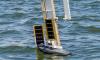 Bioinspired robot airdrops into remote waters via morphing wing-sail
 Anduril interceptor adapts to emerging threats via swappable stages
 I Built a Website to Expose Solar and Battery Scams
 Whistleblower Issues Dire Warning: Rogue AI, Hacking Nuclear Programs...



How underwater 3D printing could soon transform maritime construction
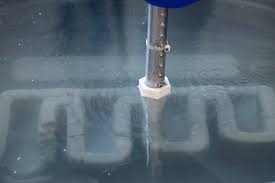
This is all painstakingly built and maintained. Engineers contend with the harsh environmental conditions in the water, figure out access to project locations, and deal with the limitations of materials that have to withstand corrosion and pressure underwater.
The US Defense Advanced Research Projects Agency (DARPA) wants to know if there's an easier way to go about maritime construction – could we simply 3D print such projects beneath the waves?
So in 2024, it issued a challenge to develop a three-dimensional concrete printing (3DCP) method and material variant that could work underwater. Oh, and the material had to incorporate seafloor sediment, so as to reduce the need to transport large quantities of it to the offshore location each time something needed to be built.
Researchers from the David A. Duffield College of Engineering at Cornell University stepped up to compete against five other teams in cracking this puzzle. Led by civil and environmental engineering professor Sriramya Nair and joined by interdisciplinary collaborators, the Cornell team branched its work 3D printing large-scale concrete structures using a 6,000-lb (2,722-kg) robotic system, and developed a novel two-stage 3DCP method.
The two-stage system overcomes a major difficulty in underwater construction: preventing the weakening of the material when the deposited cement particles fail to bind together tightly. This is usually addressed with what are called admixture chemicals – but those greatly increase the mixture's viscosity, to the point that the 3D printer can't pump it out.
The team's solution involves injecting an admixture at the nozzle; this allows for the concrete material to be pumped smoothly and to rapidly solidify upon deposition. Since it's added in this two-stage process instead of being mixed into the base mixture, it allows compensation for temperature fluctuations and variations in printing speed and layer deposition rates. The team noted in a paper that appeared in Cement and Concrete Composites last November that this ensured precise and efficient construction.
"It turned out, with our mixture we could actually 3D-print underwater by making adjustments to account for continuous water exposure," said project lead Nair.
The team received a US$1.4-million grant last May for its research. It's since demonstrated numerous test prints in a large tub of water in a Cornell lab, where it can assess the strength, shape and texture of each arch of concrete being deposited.
To replicate this sort of monitoring offshore and underwater – where fine seafloor sediments can make the water cloudy and hard to see through when disturbed – the researchers built in a control box mounted on the robot arm with sensors that check for print quality, i.e. how the layers are deposited. This allows them to make adjustments to the printing setup in real-time.
The competing teams in the 3DCP challenge will face off next month as they 3D print an arch underwater and see which one turns out the best. The Cornell team is racing against the clock to bring together all its innovations in a bid to take home the prize. We'll keep an eye out for the results in March – stay tuned for updates.