










Breaking News
 Here's How AI Is Impacting America's Mental Health Crisis
 Trump Says All Mines Cleared From Strait Of Hormuz, Warns Military Options Still On Table
 "A War On Nature Is A War On All Of Us": Trump Admin Slashing Environmental Protections...
 Write Code, Go to Prison. Slaughter Children, Get a Pardon: Welcome to American "Justice"
Top Tech News
 Portable 1MW Kaleidos Microreactor Secures Critical Nuclear Fuel Deal Through 2030s
 This New All-In-One Range Extender Is Ready To Go Into Any Electric Truck
 Aptera Reveals The Secret To Building Its Solar EV: China
 High-voltage sodium home battery emerges as affordable rooftop solar solution
 Peter Thiel-Funded Company Anduril to Triple the Number of Autonomous Surveillance...
 China has released Origin Pilot, claimed to be the world's first open-source operating system...
 ShieldAI XBAT Drone Fighters Can Give A Fighter Drone Wing to Every US Destroyer
 Brain organoids, kept alive more than five years, matured like human brains
 Parkinson's patient's tremors VANISH within minutes of GROUNDBREAKING treatment
 NEW HOMES ARE BUILT WITH THIS AND IT'S MAKING YOU SICK


Critical Linux Warning: 800,000 Devices Are EXPOSED
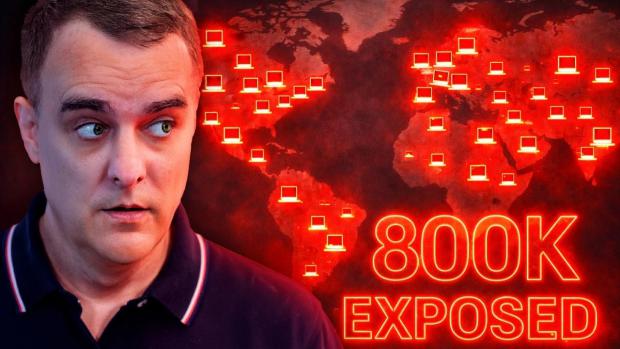
A critical Telnet authentication bypass vulnerability (CVE-2026-24061) has been discovered, allowing attackers to gain immediate root access on Linux systems without a password. In this video, I demonstrate how this "simple string" exploit works against Ubuntu servers and why nearly 800,000 exposed devices are currently at risk. Using Kali Linux 2025.4 and Wireshark, we break down the packet traffic to show exactly how the telnet -f root command bypasses the login prompt entirely. Despite Telnet being an insecure protocol, legacy IoT devices and internal lab environments remain heavily reliant on it, making this 9.8 CVSS severity bug a massive threat in 2026.
In this video, you will learn:
• The Exploit: How to replicate CVE-2026-2461 using a simple environment variable injection.
• The Analysis: A deep dive into Wireshark to see the clear-text traffic and authentication skip.
• The Scale: Why 800k+ Telnet servers are exposed and how Shodan/Gray Noise are tracking active exploitation.
• The Fix: Mitigation strategies and why you must migrate to SSH immediately.