










Breaking News
 The Trump Show
  Silver's $3 Trillion Stress Test
 BlackRock Just Confirmed the Worst-Case Scenario
 A COMEX report says JPMorgan closed its silver short around ~$78.
Top Tech News
 How underwater 3D printing could soon transform maritime construction
 Smart soldering iron packs a camera to show you what you're doing
 Look, no hands: Flying umbrella follows user through the rain
 Critical Linux Warning: 800,000 Devices Are EXPOSED
 'Brave New World': IVF Company's Eugenics Tool Lets Couples Pick 'Best' Baby, Di
 The smartphone just fired a warning shot at the camera industry.
 A revolutionary breakthrough in dental science is changing how we fight tooth decay
 Docan Energy "Panda": 32kWh for $2,530!
 Rugged phone with multi-day battery life doubles as a 1080p projector
 4 Sisters Invent Electric Tractor with Mom and Dad and it's Selling in 5 Countries



The Panic of 1857: An Austrian View
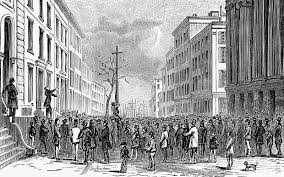
Such disparate events as the end of the Crimean War in 1856 involving England, France, Russia and Turkey, the Supreme Court's Dred Scott decision, the battle over slavery in the Kansas Territory, even the sinking of the SS Central America are all part of the developments bound together as causes of the 1857 panic.
The Banking Superintendent of New York, James Cook, called the panic "without apparent reason derived from past experience." Charles W. Calomiris and Larry Schweikart wrote, "First, the period immediately prior to the panic was one of unusual calm in the markets for commercial bills." "Second, the panic was resolved quickly." "Third, few banks failed during the panic." Really? 62 of 63 New York banks suspended specie payments.
Calomiris and Schweikart also wrote, "Explanations of the panic encounter difficulties in explaining the timing and location of its onset in the east." While lasting only from October through December of 1857, the panic caused bank runs, paralyzed commerce, and created a crisis of confidence in securities markets both here and abroad. As Austrians understand that, if there's a panic, there must be a mania, started by a monetary intervention, and then there are malinvestments to be cleared. Historians have controlled the narrative of the Panic of 1857, lumping it together with the Civil War. But there is an Austrian explanation for the panic.
One historian wrote there was "widespread prosperity" and a rapidly-growing economy in the United States from 1850 to 1856 but mentions no monetary stimulus other than the passing comment of, "People invested in western lands and railroads at unprecedented rates, based partly on a massive influx of gold from California."
"In the United States alone, gold production multiplied seventy-three times during the six-year period that began in 1848…" Economist E. Victor Morgan wrote, "The most important single factor in monetary history in the third quarter of the nineteenth century is the great increases in gold output, following the discovery of the mines of California and Australia."