










Breaking News
 Rising Prices and Falling Values--Inflation and Social Decay
 The non-Zionist Israeli Population Could Save the Day
 AfD Launches 'Knife App' As Berlin Violence Surges
 Oil Prices EXPLODE After Trump Signals That US Is Moving To Wartime Economy
Top Tech News
 DARPA O-Circuit program wants drones that can smell danger...
 Practical Smell-O-Vision could soon be coming to a VR headset near you
 ICYMI - RAI introduces its new prototype "Roadrunner," a 33 lb bipedal wheeled robot.
 Pulsar Fusion Ignites Plasma in Nuclear Rocket Test
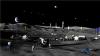 Details of the NASA Moonbase Plans Include a Fifteen Ton Lunar Rover
 THIS is the Biggest Thing Since CGI
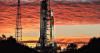 BACK TO THE MOON: Crewed Lunar Mission Artemis II Confirmed for Wednesday...
 The Secret Spy Tech Inside Every Credit Card
 Red light therapy boosts retinal health in early macular degeneration
 Hydrogen-powered business jet edges closer to certification


Investors Overreacting To Starlink's Threat To Traditional Telcos; Goldman Says

With a potential IPO later this year, the space industry - first in low-Earth orbit, then on the moon - will be center stage for years to come.
Goldman analysts, led by Andrew Lee, hosted a webcast titled "Space - Datacentres Opportunity and Telecom Risk," featuring Justin Hotchkiss (Associate Partner), Gregor Eichler (Principal), and Federico Torri (Partner) from TMT consultancy Altman Solon.
The webcast conversation looked ahead to a future in which space-based data centers could become a reality.
Goldman's telecom analysts and tech consultants discussed two major ideas:
Space data centers: Not yet deployed, but could become a reality in the near term. The advantages are low-cost solar power in space, easier cooling, no property costs, and no permitting issues. One big hurdle is the need for cheaper rocket launch costs and a lightweight cooling system. If launches drop below $200/kg and cooling hardware is very light, the cost could start to look similar to building on Earth.
Satellite connectivity for telecoms: It already exists, but investors are overreacting to the idea that satellites will "replace" traditional telcos. Satellites (especially LEO networks like Starlink) have limited capacity, variable service quality, and challenging economics for serving many everyday urban customers. They're most useful where building cell towers or fiber is expensive: rural, sparsely populated, higher-income areas. Think of Starlink and other LEO networks as complementary to telecoms.
A major technological leap is underway in space-based communications. Data centers in space are likely to become a reality within this decade, thanks to SpaceX's Starship rocket. Goldman's webcast suggests that Starlink and other LEO constellations should be more complementary than competitive to telcos for the foreseeable future.
Lee noted:
In the longer term, space data centres appear an increasingly likely reality. More relevant today, our conversation suggests the extent of investor concerns on satellite competition to telecoms and towercos are overstated - as we wrote in our 2025 satellite/telco report.
Satellite technology is more likely to be complementary rather than competitive to telcos due to satellite capacity constraints, service quality restrictions, and inferior economics for the majority of geographies. Telcos can leverage satellites to extend their own network coverage into rural areas where terrestrial build-out is costly.
Investing world impacts:
This would imply modest downside risk to towerco growth if rural connectivity is partially rerouted via satellites.
For towercos including Cellnex and INWIT, some of this satellite risk is already priced into their shares, but we do not see a catalyst for a re-rating in the near term.
For telcos including TMUS (majority owned by DT), where satellite risk to its broadband growth has pressured the share price, we see scope for a rerating as investor concerns over satellite risk abate over time and ongoing consensus upgrades continue.