










Breaking News
 Rising Prices and Falling Values--Inflation and Social Decay
 The non-Zionist Israeli Population Could Save the Day
 AfD Launches 'Knife App' As Berlin Violence Surges
 Oil Prices EXPLODE After Trump Signals That US Is Moving To Wartime Economy
Top Tech News
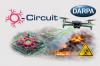 DARPA O-Circuit program wants drones that can smell danger...
 Practical Smell-O-Vision could soon be coming to a VR headset near you
 ICYMI - RAI introduces its new prototype "Roadrunner," a 33 lb bipedal wheeled robot.
 Pulsar Fusion Ignites Plasma in Nuclear Rocket Test
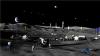 Details of the NASA Moonbase Plans Include a Fifteen Ton Lunar Rover
 THIS is the Biggest Thing Since CGI
 BACK TO THE MOON: Crewed Lunar Mission Artemis II Confirmed for Wednesday...
 The Secret Spy Tech Inside Every Credit Card
 Red light therapy boosts retinal health in early macular degeneration
 Hydrogen-powered business jet edges closer to certification


Rugged beast of a phone packs thermal and night vision for field pros
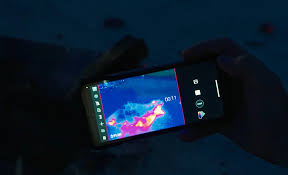
While rugged phones typically focus on surviving drops and dunks, this model aims to give users superhuman vision in challenging conditions.
Chinese rugged phone maker Ulefone has equipped its new Armor 27T Pro+ model with an unusual party trick for a smartphone: a triple camera system that includes both thermal imaging and dedicated infrared night vision. While rugged phones typically focus on surviving drops and dunks, this model aims to give users superhuman vision in challenging conditions.
Inside the phone, a MediaTek Dimensity 6300 system-on-chip (built on a 6-nanometer process) handles 5G connectivity as well as processing and graphics, paired with 24 GB of RAM (12 GB physical, plus virtual memory expandable via software) and 256 GB of storage, with more available via optional microSD cards up to 2 TB. The 6.78-inch display delivers Full HD+ resolution at 1,080 x 2,460 pixels with a 120 Hz refresh rate and 680-nit peak brightness for outdoor readability.
The standout spec is the 10,600-mAh solid-state battery. Unlike traditional lithium-ion cells, solid-state batteries use a solid electrolyte instead of liquid, offering higher energy density and longer lifespan. More importantly for field use, Ulefone claims this battery maintains full performance at -30 °C (-22 °F) – temperatures that would cripple standard smartphone batteries. The company promises a week of moderate use per charge, though real-world results will vary. Charging happens via 33-W wired or 30-W wireless, with reverse wireless charging on tap to top up accessories.
The display gets Corning's Gorilla Glass Victus protection, which Corning says offers four times better scratch resistance than previous generations and can survive 2-m (6.6-ft) drops onto hard surfaces. A proprietary uSmart 2.0 connector allows attachment of endoscopes and microscopes without blocking the USB-C charging port – useful for inspection work.
The camera array is where things get really interesting though. The main 50-megapixel shooter around back uses Samsung's ISOCELL GN1 sensor with a 1/1.31-inch-type format, 1.2-μm pixels, and an f/1.65 aperture – specs that should deliver decent low-light performance, with Ulefone claiming 40% improvement over previous models.
The thermal camera uses FLIR (Forward Looking Infrared) technology version 3.5, capturing images at 160 x 120 pixel resolution. It can detect temperature differences as small as 50 mK (0.05 °C or 0.09 °F), though Ulefone notes measurements may deviate by up to 3 °C. The technology works by detecting infrared radiation emitted by objects and converting it to visible images with false-color palettes representing different temperatures.