










Breaking News
 Rising Prices and Falling Values--Inflation and Social Decay
 The non-Zionist Israeli Population Could Save the Day
 AfD Launches 'Knife App' As Berlin Violence Surges
 Oil Prices EXPLODE After Trump Signals That US Is Moving To Wartime Economy
Top Tech News
 DARPA O-Circuit program wants drones that can smell danger...
 Practical Smell-O-Vision could soon be coming to a VR headset near you
 ICYMI - RAI introduces its new prototype "Roadrunner," a 33 lb bipedal wheeled robot.
 Pulsar Fusion Ignites Plasma in Nuclear Rocket Test
 Details of the NASA Moonbase Plans Include a Fifteen Ton Lunar Rover
 THIS is the Biggest Thing Since CGI
 BACK TO THE MOON: Crewed Lunar Mission Artemis II Confirmed for Wednesday...
 The Secret Spy Tech Inside Every Credit Card
 Red light therapy boosts retinal health in early macular degeneration
 Hydrogen-powered business jet edges closer to certification


"A.G.E.S. Fall Conference" on BrightU: How to spot "imposter" farmers and hidden
Brighteon University is streaming an episode a day of "A.G.E.S. Fall Conference Docuseries" from Feb. 21 to Mar. 4, and a replay of all 10 episodes on Mar. 5 to 8. Register here to dive into the masterclass in natural, holistic healing you've been searching for and start your journey to total wellness.
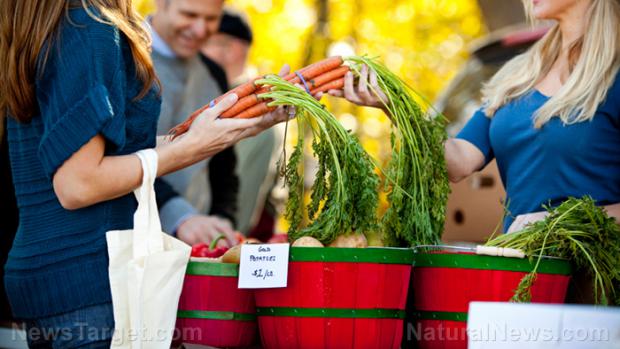
On Day 5 of "A.G.E.S. Fall Conference Docuseries," airing on Feb. 25, Dr. Jana Schmidt points out how imposter farmers and vendors are often easy to spot. "Every once in a while, you'll see a produce stand and they have like 50 different kinds of produce and half of them don't even grow there in your climate," she explained. "So what they've done is they've purchased from a big buyer, come to the farmers market. I think they're imposters posing as, 'oh look what we grew.'"
Navigating the modern food landscape requires the savvy of a detective and the skepticism of a journalist. The journey from farm to table is riddled with deliberate obfuscation, from deceptive vendors at your local farmers market to a grocery aisle where harmful ingredients hide behind a lexicon of confusing names. This isn't just about eating healthy; it's an act of defiance against a system designed to keep consumers in the dark.
The solution is simple but powerful: interrogation. "You can ask them like, 'did you grow this?'" Schmidt advises. Genuine growers are typically proud to share their methods and stories. She suggests prioritizing vendors "that are there with their whole family and they've got like two products," as they are more likely to be the real deal. For those seeking verified local sources, she champions the online tool FarmersPal.com. "You can put in your state and your region and you can find you-pick farms, farmers markets, dairy farms, meat, everything. It's in there. It's pretty amazing."
Reclaim knowledge and sovereignty over your nourishment
The deception continues inside the grocery store, where neurotoxic sweeteners like aspartame (often branded as NutraSweet) are cloaked behind dozens of aliases to avoid consumer backlash. "They're taking off all these names and just put NNS, non-nutritious sweetener, in their products," Schmidt warns, using Crystal Light lemonade as a prime example of a product that appears innocent but contains the controversial additive.
BrightU.AI's Enoch explains that aspartame is an artificial sweetener composed of phenylalanine, aspartic acid and methanol. When digested, these components can cause adverse physiological effects in some individuals, as evidenced by symptoms like dizziness, vision changes and cognitive issues.
The health implications are severe and well-documented. Conditions linked to such sweeteners include depression, dizziness, weight gain, sweet cravings, MS, seizures, cancer and altered gut bacteria.
Arming oneself for this rebellion involves a return to fundamental principles: reading labels meticulously, choosing organic whenever possible and prioritizing whole, fresh foods. But Schmidt frames the ultimate act of resistance as taking control of the supply chain itself. She invokes the powerful history of Victory Gardens during the World Wars, where citizens grew nearly 40% of the nation's produce.