










Breaking News
 Rising Prices and Falling Values--Inflation and Social Decay
 The non-Zionist Israeli Population Could Save the Day
 AfD Launches 'Knife App' As Berlin Violence Surges
 Oil Prices EXPLODE After Trump Signals That US Is Moving To Wartime Economy
Top Tech News
 DARPA O-Circuit program wants drones that can smell danger...
 Practical Smell-O-Vision could soon be coming to a VR headset near you
 ICYMI - RAI introduces its new prototype "Roadrunner," a 33 lb bipedal wheeled robot.
 Pulsar Fusion Ignites Plasma in Nuclear Rocket Test
 Details of the NASA Moonbase Plans Include a Fifteen Ton Lunar Rover
 THIS is the Biggest Thing Since CGI
 BACK TO THE MOON: Crewed Lunar Mission Artemis II Confirmed for Wednesday...
 The Secret Spy Tech Inside Every Credit Card
 Red light therapy boosts retinal health in early macular degeneration
 Hydrogen-powered business jet edges closer to certification


The Glyphosate E.O.
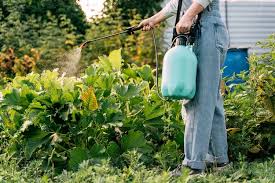
The Executive Order signed this week regarding glyphosate has stirred deep concern among Americans who had rallied behind Trump's plan to "drain the swamp." The Administration seemed to be moving the country toward restored health. The MAHA Movement, in particular, assumed the health of our nation would include an immediate separation from the chemical soup that is unfortunately found in our food.
But then, this EO appeared out of nowhere, tying glyphosate to national defense?
For those who have spent years dealing with a chronic illness from an environmental exposure, this question feels unavoidable: Why would an Administration that was beginning to recognize, on a large scale, the biological consequences of environmental toxins, take steps to secure the continued supply of one of the most widely used, poisonous herbicides in history?
More than Policy
The answer reveals something far more significant than a policy decision. It reveals how thoroughly our modern food system has been built around assumptions that few people were ever invited to question.
Glyphosate became central to agriculture because farming was gradually redesigned to accept it. Certain major crops, especially soy and corn, were genetically modified to survive direct exposure to the chemical. This allowed farmers to easily manage weeds, dramatically increase production, and reshape their expectations.
What began in the 1970s as a technological breakthrough in weed control gradually became a pillar of modern agriculture. When Monsanto introduced Roundup, an herbicide with glyphosate as its active ingredient, it was promoted as an efficient, broad-spectrum herbicide that simplified farming and improved yields. Over time, especially with the expansion of Roundup Ready crops, its use became routine. Farmers built entire crop systems around glyphosate-tolerant seeds, no-till practices, and even pre-harvest desiccation. What was once an innovation became embedded as essential for American food production.
At the same time, global manufacturing patterns shifted. As production costs and regulatory pressures increased domestically, much of the chemical manufacturing supply chain moved overseas to China. In fact, estimates indicate that Chinese manufacturers account for roughly 60–70 % of the world's total glyphosate. The result is a strategic imbalance: the United States relies heavily on China for a chemical deemed "essential" to America's modern agriculture. This potentially creates supply chain vulnerabilities, economic exposure, and even national security concerns.
The recent Executive Order must be viewed in the context of how deeply glyphosate is embedded in America's agricultural system. It did not address the health concerns associated with glyphosate exposure, nor did it attempt to resolve the scientific debates regarding its long-term biological effects.
Instead, it acknowledged a practical reality: the modern food production system relies heavily on this chemical, some would say far too heavily. For many, that recognition caused deep-seated frustration. Public awareness of glyphosate's impact on health has grown far more quickly, thanks to groups such as Moms Across America, than the agricultural system can change.