










Breaking News
 The US Military Is Involved In A Massive Mobilization Of Infantry Troops To Launch A FULL SCALE...
 Iran Is Not My Enemy
 Scientists reveal controversial plan to launch 50,000 MIRRORS into space for 'sunlight on demand
 Controversial geoengineering project sees scientists pump 65,000 litres of chemicals into...
Top Tech News
 The Pentagon is looking for the SpaceX of the ocean.
 Major milestone by 3D printing an artificial cornea using a specialized "bioink"...
 Scientists at Rice University have developed an exciting new two-dimensional carbon material...
 Footage recorded by hashtag#Meta's AI smart glasses is sent to offshore contractors...
 ELON MUSK: "With something like Neuralink… we effectively become maybe one with the AI."
 DARPA Launches New Program Generative Optogenetics, GO,...
 Anthropic Outpaces OpenAI Revenue 10X, Pentagon vs. Dario, Agents Rent Humans | #234
 Ordering a Tiny House from China, what's the real COST?
 New video may offer glimpse of secret F-47 fighter
 Donut Lab's Solid-State Battery Charges Fast. But Experts Still Have Questions



No clear Iran endgame as Trump's position shifts by the hour
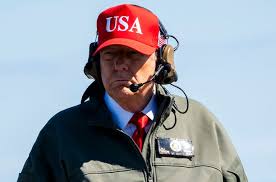
On Monday, oil prices briefly touched $120 a barrel before falling back after President Trump told CBS the "war is very complete, pretty much", claiming Iran has "no navy, no communications, no air force."
Earlier, however, his Defense Secretary Pete Hegseth had said the war was just beginning. Asked about the contradiction, Trump said both could be true: "It's the beginning of building a new country."
In the ten days since the US and Israel launched strikes on Iran, the stated American position has moved from "open to negotiations" to "unconditional surrender" to "over soon" to "hit harder" to "building a new country."
For anyone attempting to read Washington's intentions, the official signaling has been indistinguishable from noise.
The practical question now is whether the two sides can find a durable exit that ends hostilities and restores a modicum of stability, including to global energy markets, which have been whipsawed by the violence. On current evidence, though, the answer is not encouraging.
The US side of the problem is straightforward. Trump's stated positions do not reliably indicate policy direction. He responds to market pressure (oil prices, stock selloffs) more than to strategic logic.
The 5% drop in crude prices after his CBS interview suggests that markets know this and are trading on Trump's mood, not on a credible de-escalation pathway.
The strikes have killed Iran's Supreme Leader Ali Khamenei, dozens of senior officials and military commanders, and – as Trump himself acknowledged – destroyed most of the people the US would need to negotiate with. "Most of the people we had in mind are dead", he told reporters. "Pretty soon we are not going to know anybody."
Domestic pressure has not yet produced a constraint. Seven US service members have been killed – the first American combat deaths in the Middle East since the withdrawal from Afghanistan – and 18 others seriously wounded.
Congress attempted to reassert its war powers and failed – the 8th failure for the Senate since June 2025. Parts of Trump's own political base have expressed frustration – conservative host Megyn Kelly posted "I honestly can't believe we're doing this again" – but the split has not reached critical mass.