










Breaking News
 Japan Is in Trouble. So Are You.
 The Super Bowl Top Signal
 Instant, real-time video AI is now upon us, for better and worse
 New laser weapon turns infantry into drone killers
Top Tech News
 Scientists at the Harbin University of Science and Technology have pioneered a sophisticated...
 Researchers have developed a breakthrough "molecular jackhammer" technique...
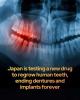 Human trials are underway for a drug that regrows human teeth in just 4 days.
 Singularity Update: You Have No Idea How Crazy Humanoid Robots Have Gotten
 Musk Whips Out 'Macrohard' In Disruptive Tesla-xAI Bid To Shaft Software Companies
 This Bonkers Folding X-Plane Is One Step Closer to Hitting the Skies
 Smart 2-in-1 digital microscope goes desktop or handheld as needed
 Human Brain Cells Merge With Silica To Play DOOM
 Will Yann LeCun Provide The Next Breakthrough In AI?
 Human Brain Cells Merge With Silica To Play DOOM



In March 2026, Bank of America settled with Jeffrey Epstein's survivors.
Except it isn't done. Because Bank of America is the third major bank to pay for servicing Epstein's network. Before it: JPMorgan Chase - $290 million. Deutsche Bank - $75 million, plus a separate $150 million regulatory penalty. Combined penalties across banking institutions and Epstein's estate now exceed $775 million. Not one banker has faced criminal prosecution. Not one institution has admitted wrongdoing.
What the court record actually shows is something the press release format cannot contain.
While Epstein was alive, the bank filed suspicious activity reports on $4.3 million in transactions. One month after his death, with no client relationship left to protect, it filed retroactive SARs covering $1.3 billion across 4,700 transactions dating to 2003. The ratio is 300:1. That ratio is not a measure of blindness. It is a measure of choice.
The retroactive SAR noted, in passing, Epstein's "relationships with two U.S. presidents." The bank had known this for years. Which two presidents remains officially unconfirmed.
And then there's the layer that explains why so many powerful men stayed silent even when they'd seen enough to leave: a private kompromat operation with at least one documented connection to a graduate of the FSB Academy — Russia's intelligence training institution — who was simultaneously running the St. Petersburg International Economic Forum and exchanging emails with Epstein about a Russian woman "attempting to blackmail powerful businessmen in New York."
Forty-eight hours before his death, Epstein signed a trust named after his birth year and transferred $577 million beyond the reach of his victims. The executor of that estate was the same accountant who had opened the victims' Bank of America accounts.
None of this is speculation. Every claim in the piece that follows links directly to a federal court filing, a regulatory consent order, a Senate Finance Committee report, or sworn congressional testimony.
The closest thing to a conclusion the record permits: the system didn't fail. It worked exactly as the incentives designed it to work. Three settlements and $775 million have now repriced those incentives — not as justice, but as a data point in every compliance department's risk model.