










Breaking News
 NonConformist Series: How to Survive the Coming Apocalypse Virtual Event; Ernest Hancock Emcee
 Hormuz Confusion - Make it make sense!
 Nearly Half of Cancer Patients Taking Ivermectin + Mebendazole...
 Nearly $1 trillion. That's how much private credit is now sitting inside US life...
Top Tech News
 Energy storage breakthrough traps sunlight in a molecule
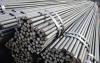 Steel rebar may have met its match – in the form of wavy plastic
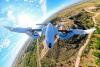 Video: Semicircular wings give Cyclone VTOL a different kind of lift
 After 20 Years, Wave Energy Finally Works
 FCC Set To "Supercharge" Starlink Space Internet With "Seven-Fold More Capacity"
 'World's First' Humanoid Robot For Real Household Chores Launched With 16-Hour Battery
 XAI Training 10 Trillion Parameter Model – Likely Out in Mid 2026
 The $7 Powder That Beats Your $5,000 AC Unit!
 Private credit is now a $3 trillion asset class and investors are receiving 45 cents on the dollar
 Converting Diesel Vehicles to Run on Waste Vegetable Oil, by Polar Bear



Energy Protests in Ireland
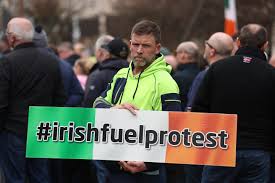
Ireland is now confronting a full-scale energy protest movement that has gone far beyond symbolic demonstrations. What began as opposition to rising fuel costs has escalated into coordinated nationwide disruption, with farmers, haulers, and transport operators blocking major motorways, fuel depots, and even the country's only oil refinery. The scale is unprecedented, with convoys and blockades reported in Dublin, Cork, Galway, Limerick, and beyond, effectively bringing parts of the country to a standstill.
The immediate driver is energy prices, which have surged sharply due to geopolitical tensions, particularly conflict in the Middle East. Diesel, petrol, and heating fuel costs have risen to levels that many small businesses and agricultural operators say are no longer sustainable. Protesters are demanding direct intervention, including fuel price caps, removal of carbon taxes, and emergency subsidies to offset rising costs.
What makes this situation critical is not just the protest itself, but how it is being carried out. Demonstrators have targeted the arteries of the energy system. Fuel depots in Galway and Limerick have been blocked, while the Whitegate refinery in Cork, which supplies a significant portion of Ireland's fuel, has been shut down by protesters. As a result, up to half of the country's fuel supply has been effectively immobilized, not because of global shortages, but because distribution has been cut off internally.