










Breaking News
 Massachusetts Dems Advance Bill to LIMIT How Far You Can DRIVE In Your Own Car
 Greater Israel Wrecked the Peace Talks
 Watch: Morano's closing keynote speech to the 16th International Conference on Climate Change...
 What Is Fueling Unrest Across the EU?
Top Tech News
 Energy storage breakthrough traps sunlight in a molecule
 Steel rebar may have met its match – in the form of wavy plastic
 Video: Semicircular wings give Cyclone VTOL a different kind of lift
 After 20 Years, Wave Energy Finally Works
 FCC Set To "Supercharge" Starlink Space Internet With "Seven-Fold More Capacity"
 'World's First' Humanoid Robot For Real Household Chores Launched With 16-Hour Battery
 XAI Training 10 Trillion Parameter Model – Likely Out in Mid 2026
 The $7 Powder That Beats Your $5,000 AC Unit!
 Private credit is now a $3 trillion asset class and investors are receiving 45 cents on the dollar
 Converting Diesel Vehicles to Run on Waste Vegetable Oil, by Polar Bear



India's Nuclear Bet Is Starting To Pay Off
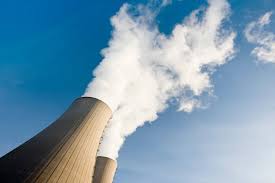
The country's most advanced nuclear reactor reached criticality earlier this month, meaning that the nuclear chain reaction powering the plant is self-sustaining. This breakthrough will ultimately allow India to import far less uranium to power its nuclear program, and can be adapted to use domestic thorium reserves for fuel in a win-win for the subcontinent's energy security and autonomy.
When the plant comes online fully, it will be only the second commercial breeder plant of its kind in the world. The other is in Russia. These plants could change the nuclear landscape completely, as they are capable of producing more fissile material (in essence, nuclear fuel) than they consume. Indian Prime Minister Narendra Modi hailed the achievement as "a proud moment for India" and "a defining step" in advancing India's nuclear program.
"This advanced reactor, capable of producing more fuel than it consumes, reflects the depth of our scientific capability and the strength of our engineering enterprise. It is a decisive step towards harnessing our vast thorium reserves in the third stage of the programme," Modi said in a post on X on Monday.
This achievement is a long time in the making. The plant, based in the Southern Indian state of Tamil Nadu, has been in development since 2000. It's not yet clear when the plant will come online, but it is expected to generate 500 megawatts of carbon-free electricity. This will represent a major step toward India's aim to achieve 100 gigawatts of capacity by 2047, a significant boost from today's level of approximately 9 gigawatts.
At present, nuclear power accounts for just 2% of India's energy mix, but the carbon-free form of energy production will be a critical part of India's decarbonization strategy. India is currently between a rock and a hard place when it comes to balancing energy security and sustainability with the nation's humans and economic development goals.
Despite considerable economic development in recent decades, India remains one of the poorest countries in the world, and increasing energy access is a central platform of India's continued climb out of poverty. "Tackling the energy access gap is a critical step in meeting the country's economic and social development ambitions, and it has been a top priority for successive Indian governments," says a Guardian report from September of last year.
Meeting the energy needs of all 1.47 billion people in India without majorly derailing global climate goals will require enormous investments in a wide array of traditional and innovative energy alternatives. India is already the third-largest energy consumer in the world after the United States and China, and its needs will only continue to grow. Nuclear, and next-gen nuclear such as breeder reactors, will be just one component of a diverse energy portfolio.