










Breaking News
 Former Congressman Blows The Whistle On Blackmail And Honeypots In Congress
 Meta To Unleash First Wave Of Mass Layoffs May 20 As It Eliminates 10% Of Its Workers
 Google's Stake In SpaceX Could Be Worth $122 Billion At IPO
 Is America On The Verge Of A Nuclear Renaissance?
Top Tech News
 Researchers Turn Car Battery Acid and Plastic Waste into Clean Hydrogen and New Plastic
 'Spin-flip' system pushes solar cell energy conversion efficiency past 100%
 A Startup Has Been Quietly Pitching Cloned Human Bodies to Transfer Your Brain Into
 DEYE 215kWh LiFePO4 + 125,000W Inverter + 200,000W MPPT = Run A Factory Offgrid!!
 China's Unitree Unveils Robot With "Human-Like Physique" That Can Outrun Most People
 This $200 Black Shaft Air Conditions Your Home For Free Forever -- Why Is It Banned in the U.S.?
 Engineers have developed a material capable of self-repairing more than 1,000 times,...
 They bypassed the eye entirely.
 The Most Dangerous Race on Earth Isn't Nuclear - It's Quantum.
 This Plasma Stove Cooks Hotter Than The Sun


Iran to control Strait of Hormuz traffic until deal is reached to end war: Top security body
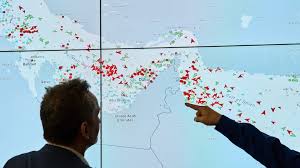
The SNSC's secretariat issued a statement on Saturday regarding the state of play in negotiations with the United States, mediated by Pakistan, to end the ongoing war, which has temporarily been halted after a ceasefire was announced on April 8.
The ceasefire will expire on Wednesday. A first round of talks in Islamabad failed to produce an agreement, with Iranian officials blaming the US side for putting forward excessive demands and shifting its position at the negotiating table.
One sticking point was Iran's control over the Strait of Hormuz, which the Islamic Republic closed to shipping linked to the aggressors and their allies shortly after the war began on February 28.
Noting that most US military logistics in the Persian Gulf pass through the Strait of Hormuz, which Iran considers a threat to its national security and regional stability, The SNSC said Iran will continue to maintain oversight and control of all traffic through the waterway until the war permanently comes to an end.
Iran will enforce this by obtaining full data on all transiting vessels, issuing transit permits according to regulations tailored to wartime conditions, collecting fees for security, safety, and environmental protection services, and mandating specific navigation routes, the statement said.
"Should the enemy attempt to disrupt shipping or impose measures such as a naval blockade, the Islamic Republic of Iran will consider that a violation of the ceasefire and will prevent the conditional and limited opening of the Strait of Hormuz," it added.
The SNSC noted that Iran had conditionally reopened the Strait of Hormuz to commercial shipping on Friday after the US and the Israeli regime accepted to cease hostilities on all fronts, including a halt to Israeli attacks on Lebanon, which was a key Iranian precondition for accepting the temporary ceasefire.
However, it said that Iran views a continued US naval blockade as a violation of the ceasefire and will not allow conditional and restricted passage through the Strait of Hormuz if the blockade remains in place.
The statement said that Iran's decision to reopen the Strait in a limited way, which was announced by Foreign Minister Abbas Araghchi on Friday, also came after the US submitted new proposals for a peace deal through a Pakistani delegation, led by Army chief Field Marshal Asim Munir, which traveled to Tehran earlier this week.
It said that the conditional reopening had only applied to commercial shipping, insisting that military vessels and commercial ships linked to "adversarial countries" will continue to be banned from the key waterway until the war is "definitively ended" and "sustainable peace" is achieved in the region.
The SNSC reiterated in its statement that Iran has yet to respond to new US proposals for a possible deal, which came after Iranian and US delegations failed to reach an agreement following intensive negotiations in Pakistan on April 11-12.