










Breaking News
 "The World Is Losing Trust": Foreign Investment In Germany Plunges To Lowest Level Since 2
 The Race To Build The World's Tallest Skyscraper
 At Last Minute, SEC Suddenly Delays Plan To Allow Crypto Versions Of US Stocks
 Debt Remembered And Debt Ignored
Top Tech News
 Cars Are Fast Becoming Dystopian Prison Pods...
 Our Emergency Water Plan Wasn't Good Enough - So We Built This
 Sodium Ion Batteries Can Reach 100 Gigawatt Per Hour Per Year Scale in 2027
 Juiced Bikes proves capable electric motorcycles don't have to cost a lot
 Headlight projectors turn your car into a drive-in theater
 US To Develop Small Modular Nuclear Reactors For Commercial Shipping
 New York Mandates Kill Switch and Surveillance Software in Your 3D Printer ...
 Cameco Sees As Many As 20 AP1000 Nuclear Reactors On The Horizon
 His grandparents had heart disease.
At 11, Laurent Simons decided he wanted to fight aging.
His grandparents had heart disease.
At 11, Laurent Simons decided he wanted to fight aging.
 Mayo Clinic's AI Can Detect Pancreatic Cancer up to 3 Years Before Diagnosis–When Treatment...



Google's Stake In SpaceX Could Be Worth $122 Billion At IPO
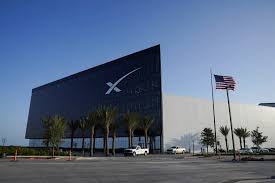
Regulatory filings indicate Google owned about 6.11% of SpaceX at the end of 2025. At a projected $2 trillion IPO valuation, that stake would be worth roughly $122 billion. After SpaceX's merger with xAI, the holding is estimated to have diluted to around 5%, or about $100 billion at the same valuation.
The figures offer a clearer picture of Google's position in SpaceX, which had previously been acknowledged without precise detail. Only Google and Elon Musk — who controls roughly 40% — were required to disclose holdings above 5%.
Bloomberg writes that SpaceX is targeting a potential June IPO and could raise as much as $75 billion, which would make it one of the largest listings ever. At that valuation, even a small fraction of ownership would translate into significant dollar value.
Early investors are positioned for outsized returns. Some analysts estimate that backers who entered as recently as 2021 could see gains of around 20 times their original investment.
Founded in 2002, SpaceX reached a $1 billion valuation within eight years, a relatively fast climb for a capital-intensive aerospace company.
Google first invested in 2015, joining Fidelity in a $1 billion funding round that valued SpaceX at $10 billion and gave the firms a combined 10% stake.
Ownership stakes have shifted over time due to dilution and secondary share sales. In 2020, Google held about 7.64% while Musk's stake was around 47%. Early investor Founders Fund has since dropped below the 5% disclosure threshold.
Alphabet does not separately report its SpaceX holdings in earnings, though it has recorded sizable unrealized gains tied to private investments, including an $8 billion increase in early 2025 linked to SpaceX.
The IPO is expected to create significant liquidity for employees and insiders, potentially prompting departures as some cash out or pursue new ventures.
Board members and long-time investors also stand to benefit, underscoring the scale of wealth that could be generated by SpaceX's anticipated debut.