










Breaking News
 The Real Reason A 3rd Assassin Just Tried to Kill Trump - And Who Hired Him
 The Future of Home Gardening? I Found It in Texas!
 Why The Debt Cannot Be Ignored!
 Defenses Against Oligarchs' Aggression
Top Tech News
 Researcher wins 1 bitcoin bounty for 'largest quantum attack' on underlying tech
 Interceptor-Drone Arms-Race Emerges
 A startup called Inversion has introduced Arc, a space-based vehicle...
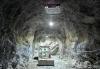 Mining companies are using cosmic rays to find critical minerals
 They regrew a severed nerve - by shortening a bone.
 New Robot Ants Work Like Real Insects To Build And Dismantle On Their Own
 Russian scientists 'are developing the world's first drug to delay ageing' months after
 Sam Altman's World ID Expands Biometric Identity Checks
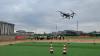 China Tests Directed Energy Beam That Recharges Drones Mid-Flight
 Jurassic Park might arrive sooner than expected, just with Dinobots.



Hayek, Orwell, And 'The End Of Truth'
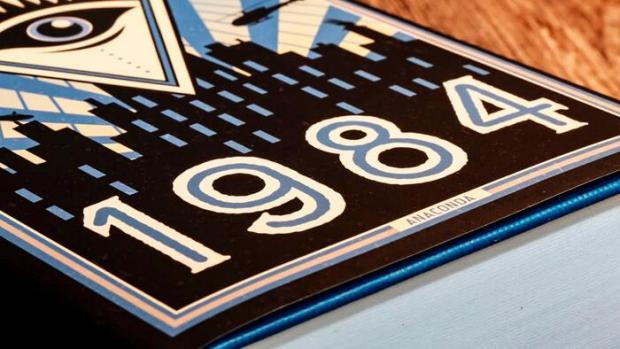
Authored by Jonathan Miltimore via Civitas Institute,
In 1942, after fighting in the Spanish Civil War (1936–1937), a disillusioned writer returned to London to write about his experience. It wasn't just that the fascists in Spain had won and his side—a small, anti-Stalinist Marxist group—had lost. What frightened him was the ease with which truth itself had been erased and replaced by propaganda.
"I saw great battles reported where there had been no fighting, and complete silence where hundreds of men had been killed. I saw troops who had fought bravely denounced as cowards and traitors, and others who had never seen a shot fired hailed as the heroes of imaginary victories ... and I saw newspapers in London retailing these lies and eager intellectuals building emotional superstructures over events that had never happened."
The writer was George Orwell, and the quote appears in his book "Looking Back on the Spanish Civil War."
The disconnect between reality and narrative clearly made an impression on Orwell, who worried that "the very concept of objective truth is fading out of the world." The theme of falsified history and the destruction of truth would resurface in his fictional masterpiece "Nineteen Eighty?Four," where "memory holes" swallowed inconvenient facts and the past was rewritten to suit the Party's needs.