










Breaking News
 HALF THE HERD GONE | THE WAR ON CATTLE the numbers are STAGGERING and the plan is global.
Steak 'n Shake's new chief MAHA officer: We're going 'back to the glory days of fast
 Ex-CIA Officer John Kiriakou on the Truth About Iran, False Flags, and What's Really Happening i
 Episode 500 - What NO ONE Is Saying About Polymarket
Top Tech News
 Researcher wins 1 bitcoin bounty for 'largest quantum attack' on underlying tech
 Interceptor-Drone Arms-Race Emerges
 A startup called Inversion has introduced Arc, a space-based vehicle...
 Mining companies are using cosmic rays to find critical minerals
 They regrew a severed nerve - by shortening a bone.
 New Robot Ants Work Like Real Insects To Build And Dismantle On Their Own
 Russian scientists 'are developing the world's first drug to delay ageing' months after
 Sam Altman's World ID Expands Biometric Identity Checks
 China Tests Directed Energy Beam That Recharges Drones Mid-Flight
 Jurassic Park might arrive sooner than expected, just with Dinobots.



Oil Production In The Persian Gulf Has Fallen 57 Percent From Pre-War Levels
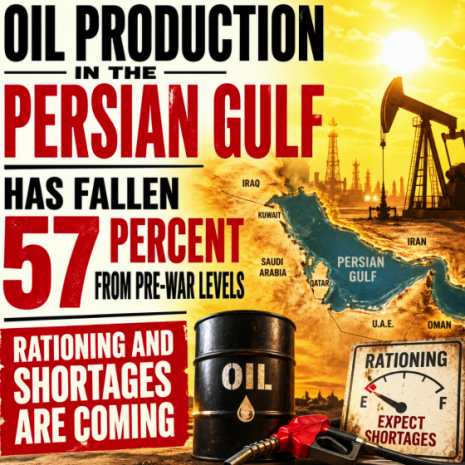
They aren't telling you the truth about what is coming. Even if the Strait of Hormuz reopens tomorrow, and there is no way that is going to happen, oil production will not return to pre-war levels for years. In other words, we are facing an extended global energy crisis no matter what happens now. Of course if the fighting resumes and more oil and gas infrastructure is destroyed, the consequences that we will experience will be even worse. We are already witnessing rationing and shortages in some parts of Asia because they are more dependent on energy from the Middle East than anyone else. But as nations all over the world run through their strategic reserves, rationing and shortages will become a lot more widespread during the months that are ahead of us.
Most people living in the western world have no idea how much damage has already been done to oil and gas infrastructure in the Middle East.
According to Goldman Sachs, oil production in the Persian Gulf has declined by a whopping 57 percent from pre-war levels…
The war with Iran is having an enormous impact on the global oil market. According to an estimate by Goldman Sachs, oil production from the Persian Gulf region is down 57% from its pre-war level, or about 14.5 million barrels per day. The world is currently covering the shortfall by drawing oil from storage, including a record 400 million barrel release by members of the International Energy Agency (IEA).