










Breaking News
 Tuesday War Room LIVE: FBI Raids Fraudulent Somali Daycare Centers In Minnesota...
 Is America a Racist Nation?
 WATCH -- Minneapolis: FBI Raids Childcare Facilities Linked to Somali Fraud
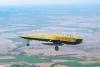 US Navy's new robotic refueling drone completes first operational flight
Top Tech News
 Researcher wins 1 bitcoin bounty for 'largest quantum attack' on underlying tech
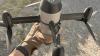 Interceptor-Drone Arms-Race Emerges
 A startup called Inversion has introduced Arc, a space-based vehicle...
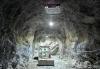 Mining companies are using cosmic rays to find critical minerals
 They regrew a severed nerve - by shortening a bone.
 New Robot Ants Work Like Real Insects To Build And Dismantle On Their Own
 Russian scientists 'are developing the world's first drug to delay ageing' months after
 Sam Altman's World ID Expands Biometric Identity Checks
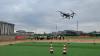 China Tests Directed Energy Beam That Recharges Drones Mid-Flight
 Jurassic Park might arrive sooner than expected, just with Dinobots.



US Farmers Are Facing Two Historic Catastrophes At The Same Time In 2026
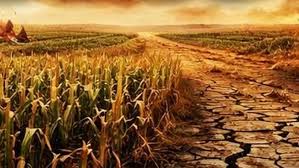
Now the war in the Middle East has caused fertilizer prices to go absolutely haywire, and a historic drought has created nightmare conditions for farmers from coast to coast. What we are witnessing is truly unprecedented. One recent survey discovered that 70 percent of U.S. farmers won't be able to afford all of the fertilizer that they need this year. When have we ever seen that happen before? And some farmers are telling us that they may not plant anything at all this year due to extreme drought. If the information in this article shocks you, that is good, because we all need a major league wake up call right now.
The Strait of Hormuz is the most important chokepoint on the entire planet, and as I write this article there are hundreds of commercial vessels on both sides of the Strait that are unable to travel through it…
Hundreds of commercial tankers are stranded on both sides of the Strait of Hormuz after Iran shut the critical chokepoint on April 18, halting traffic and leaving crews trapped amid reports of gunfire and "traumatic experiences" on board.
The Strait of Hormuz is considered an international waterway under international law, through which ships have the right of transit passage, according to the United Nations Convention on the Law of the Sea (UNCLOS).
Approximately one-third of all globally-traded nitrogen fertilizer normally travels through the Strait of Hormuz, and nations all over the globe use natural gas that is exported through the Strait of Hormuz to make their own nitrogen fertilizer.
So the fact that the Strait of Hormuz is closed is a really big deal, because without sufficient quantities of nitrogen fertilizer we do not have any hope of feeding the entire planet…
The connection is simple, agricultural fact, not speculation: reduced fertilizer application directly translates to plummeting crop yields. Modern industrial agriculture is utterly dependent on synthetic nitrogen, a product of the Haber-Bosch process which itself requires immense amounts of natural gas [3]. With the Strait of Hormuz closed and LNG infrastructure attacked, the feedstock for this process is becoming scarce and prohibitively expensive. As one analysis starkly put it, half the world's nitrogen supply is now compromised, threatening global agriculture [4]. This isn't a theory; it's chemistry and logistics.
The coming scarcity will not manifest as a gradual, manageable price increase. It will be a sudden, severe shortage hitting supermarket shelves. The system has no slack. As farmers face soaring costs for diesel and natural gas, many are reducing planting or cutting back on fertilizer application, which threatens global grain yields [5]. The recent failure of a critical Australian ammonia plant, exacerbating the global crisis, is just one more domino falling [6]. We are witnessing a cascading failure.