










Breaking News
 $300M DATA DEAL | Palantir Now Has a File on Every American Farmer
 Fear Is the Mind Killer
 Dr. Steven Greer Is About To Reveal The Most Important Development...
 Senator Finds More Evidence Federal Officials Evaded FOIA
Top Tech News
 Researcher wins 1 bitcoin bounty for 'largest quantum attack' on underlying tech
 Interceptor-Drone Arms-Race Emerges
 A startup called Inversion has introduced Arc, a space-based vehicle...
 Mining companies are using cosmic rays to find critical minerals
 They regrew a severed nerve - by shortening a bone.
 New Robot Ants Work Like Real Insects To Build And Dismantle On Their Own
 Russian scientists 'are developing the world's first drug to delay ageing' months after
 Sam Altman's World ID Expands Biometric Identity Checks
 China Tests Directed Energy Beam That Recharges Drones Mid-Flight
 Jurassic Park might arrive sooner than expected, just with Dinobots.



How to Use Potassium Iodide After a Nuclear Emergency
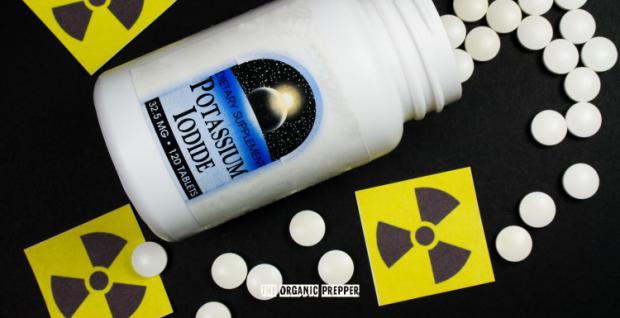
Given the current concerns, you may be adding some emergency supplies that you are unfamiliar with to your pantry and medicine cabinet. This article explains how to use potassium iodide after a nuclear strike and addresses some frequently asked questions.
At the end, there's a link to a downloadable format of this article that you can print out to keep with your emergency supplies. I'm not a doctor – this article is based on research done on the FDA and CDC websites. Sources are cited at the end.
(You can find this information and more in our printable Nuclear Survival Anthology.)
(The abbreviation for potassium iodide is KI, which I'll use for the rest of the article.)
Why you need potassium iodide after a nuclear emergency
Aside from the immediate threats of a nuclear blast, the thyroid gland is the most susceptible organ to damage from radiation. Potassium iodide is a stable form of iodine (stable meaning it isn't radioactive.) If the thyroid gland is loaded with stable iodine, it can't absorb radioactive iodine. Radioactive iodine can cause cancer. Here's how the CDC explains it:
The thyroid gland cannot tell the difference between stable and radioactive iodine. It will absorb both. KI (potassium iodide) blocks radioactive iodine from entering the thyroid. When a person takes KI, the stable iodine in the medicine gets absorbed by the thyroid. Because KI contains so much stable iodine, the thyroid gland becomes "full" and cannot absorb any more iodine—either stable or radioactive—for the next 24 hours.
This doesn't protect your body from any other type of radioactive isotopes – only radioactive iodine. It won't undo the damage done by radioactive iodine, so you must begin taking it immediately for protection. If there is no radioactive threat, you should not take KI, as it can be harmful.