










Breaking News
 $300M DATA DEAL | Palantir Now Has a File on Every American Farmer
 Fear Is the Mind Killer
 Dr. Steven Greer Is About To Reveal The Most Important Development...
 Senator Finds More Evidence Federal Officials Evaded FOIA
Top Tech News
 Researcher wins 1 bitcoin bounty for 'largest quantum attack' on underlying tech
 Interceptor-Drone Arms-Race Emerges
 A startup called Inversion has introduced Arc, a space-based vehicle...
 Mining companies are using cosmic rays to find critical minerals
 They regrew a severed nerve - by shortening a bone.
 New Robot Ants Work Like Real Insects To Build And Dismantle On Their Own
 Russian scientists 'are developing the world's first drug to delay ageing' months after
 Sam Altman's World ID Expands Biometric Identity Checks
 China Tests Directed Energy Beam That Recharges Drones Mid-Flight
 Jurassic Park might arrive sooner than expected, just with Dinobots.



Will Justices Side With Pesticide Giant or Cancer Victim? SCOTUS Weighs Landmark Liability Case
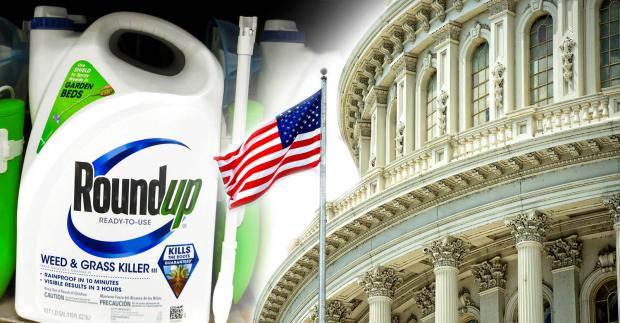
The U.S. Supreme Court today heard arguments in a case that will determine if pesticide companies can be held liable for health harms caused by their products if the EPA doesn't require those health warnings on product labels. A man who alleges that Roundup weedkiller caused his cancer brought the case against Bayer. A lower court awarded the man $1.25 million. Bayer is seeking to have the ruling overturned.
(Children's Health Defense) In widely anticipated oral arguments today, the U.S. Supreme Court gave no clear signal as to whether it will side with Bayer, which is seeking to avoid lawsuits related to its Roundup weedkiller, or a lower court, which ordered Bayer to pay $1.25 million to a man who alleges Roundup caused his cancer.
At issue is whether pesticide companies are immune from lawsuits for failing to warn consumers about health harms if the U.S. Environmental Protection Agency (EPA) doesn't require the companies to include those warnings on their product labels.
Today's arguments stemmed from a lawsuit filed in 2019 against Monsanto by John Durnell, who said he developed non-Hodgkin lymphoma after using Roundup for years. Studies have linked glyphosate, the key active ingredient in Roundup, to non-Hodgkin lymphoma.
Durnell sued Monsanto, which originally developed and marketed Roundup, for failing to warn users about the product's cancer risk.