










Breaking News
 The Tesla Semi Is Finally Going Into Mass Production
 Turkey is Iran war's biggest winner -- without firing a shot
 THIS IS GOING TO BE AN EXIT AND BUILD LIKE NO OTHER
 Accept payments in cryptocurrency and get paid near-instantly in USD
Top Tech News
 Researcher wins 1 bitcoin bounty for 'largest quantum attack' on underlying tech
 Interceptor-Drone Arms-Race Emerges
 A startup called Inversion has introduced Arc, a space-based vehicle...
 Mining companies are using cosmic rays to find critical minerals
 They regrew a severed nerve - by shortening a bone.
 New Robot Ants Work Like Real Insects To Build And Dismantle On Their Own
 Russian scientists 'are developing the world's first drug to delay ageing' months after
 Sam Altman's World ID Expands Biometric Identity Checks
 China Tests Directed Energy Beam That Recharges Drones Mid-Flight
 Jurassic Park might arrive sooner than expected, just with Dinobots.



Colorado Speed Enforcement Program Information
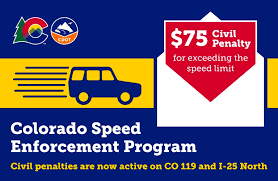
What is the Colorado Speed Enforcement Program?
The Colorado Speed Enforcement Program is a new camera-based speed enforcement program that utilizes automated vehicle identification systems (AVIS). The program aims to improve safety for all roadway users, including drivers, road workers and law enforcement by managing speeds and reducing speed-related crashes on state highways. AVIS is deployed in designated corridors, school zones and work zones along high-risk corridors where speeding is a concern, encouraging safer driving and aiming to protect everyone on the road. AVIS refers to any system that uses machines (including camera technology) to automatically detect and capture speeding violations.
Why is this program being implemented?
The program aims to improve driver behavior and enforce adherence to posted speed limits to reduce crashes and fatalities in work zones, school zones and other high-risk corridors. Preliminary data shows that there were nine work zone fatalities in 2025, marking a 70% decrease since 2024 (30). Additionally, work zone crashes in Colorado caused 554 injuries in 2025, a nearly 8% decrease from 2024 (602). Nationally, work zones saw 96,000 crashes and 891 fatalities in 2022. By enforcing consistent and neutral enforcement, the goal is to encourage safer driving in high-risk areas and protect more people from serious crashes, injuries and death.