










Breaking News
 Mercantilism: China and Beyond
 The Magician, the Martyr, and the 33% Solution: Why Every Trump Poll Slump Requires A Fake...
 'Bitcoin Isn't Going Anywhere': Trump Officials Discuss DOJ, FBI Refocus on Crypto Crime
 The Praxian Genocidal Kill Chain – Part 1
Top Tech News
 His grandparents had heart disease.
At 11, Laurent Simons decided he wanted to fight aging.
His grandparents had heart disease.
At 11, Laurent Simons decided he wanted to fight aging.
 Mayo Clinic's AI Can Detect Pancreatic Cancer up to 3 Years Before Diagnosis–When Treatment...
A multi-terrain robot from China is going viral, not because of raw speed or power...
 The World's Biggest Fusion Reactor Just Hit A Milestone
 Wow. Researchers just built an AI that can control your body...
 Google Chrome silently installs a 4 GB AI model on your device without consent
 The $5 Battery That Never Dies - Edison Buried This 100 Years Ago
 That is not a real fish. IT'S A ROBOT.
 Scientists Unveil Hemp Alternative to Plastic That Can Withstand Boiling Water...
 A Robot Economy: Who Gets Rich, Who Gets Left Behind


Maersk CEO Warns Iran War Is A "New Wake-Up Call" For Global Trade
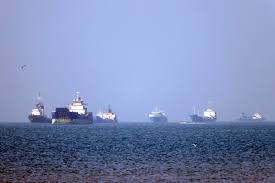
Frederic Lasserre, head of research at Gunvor, one of the world's largest oil traders, warned earlier this week: "The tipping point is clearly June. This is the point at which something has to give."
JPMorgan analysts warned that the world is spiraling toward a catastrophic cliff-edge shortage of crude oil if the maritime chokepoint is blocked for another four weeks.
Speaking to CNBC's "Squawk Box Europe" earlier this morning, Maersk CEO Vincent Clerc warned that a "new wake-up call" has emerged beyond energy markets and that if the Hormuz chokepoint remains shuttered, it could severely impact global trade in the coming months.
Clerc was speaking to CNBC after Maersk reported a plunge in profitability and kept its guidance unchanged, but warned that the US-Iran war and the resulting Gulf energy shock are "dominant forces shaping the macroeconomic outlook, as well as the trade and logistics environment."
Maersk wrote in its earnings report that the Iran war had introduced an "additional layer of uncertainty."
"Currently, fragile ceasefires are in place in both Iran and Lebanon, negotiations proceed slowly, and traffic at the Strait of Hormuz remains at a near-standstill. The conflict has already weighed on sentiment. Consumer confidence deteriorated," the shipper said.
Maersk warned that crude oil prices in the $90 to $100 per barrel range and continued Hormuz chokepoint disruption would soon begin hitting global container demand, which is still expected to grow between 2% and 4%.
It noted that the balance of risks is "on the downside and more adverse outcomes cannot be ruled out."
"Energy and shipping disruptions in the Strait of Hormuz are rapidly reshaping global supply chains," Maersk said in the earnings report. "After the recent tariffs on U.S. imports, the conflict represents another wake-up call to deploy new tools to make supply chains more resilient and develop new strategies to mitigate future disruptions."
We pointed out earlier this week:
Trump's Project Freedom Likely Triggered By Oil Market's One-Month Countdown To Chaos
Latest as of Thursday morning:
It is increasingly evident that another month of Hormuz disruption represents a critical tipping point for energy markets and the global economy. If the conflict extends through June and the chokepoint remains shuttered, first-order impacts would likely worsen across Asia and Europe, where dependence on Gulf crude, refined products, LNG, and container flows is highest. From there, the shock could spread into fuel shortages, factory disruptions, higher shipping costs, and broader economic turmoil.