










Breaking News
 Mercantilism: China and Beyond
 The Magician, the Martyr, and the 33% Solution: Why Every Trump Poll Slump Requires A Fake...
 'Bitcoin Isn't Going Anywhere': Trump Officials Discuss DOJ, FBI Refocus on Crypto Crime
 The Praxian Genocidal Kill Chain – Part 1
Top Tech News
 His grandparents had heart disease.
At 11, Laurent Simons decided he wanted to fight aging.
His grandparents had heart disease.
At 11, Laurent Simons decided he wanted to fight aging.
 Mayo Clinic's AI Can Detect Pancreatic Cancer up to 3 Years Before Diagnosis–When Treatment...
A multi-terrain robot from China is going viral, not because of raw speed or power...
 The World's Biggest Fusion Reactor Just Hit A Milestone
 Wow. Researchers just built an AI that can control your body...
 Google Chrome silently installs a 4 GB AI model on your device without consent
 The $5 Battery That Never Dies - Edison Buried This 100 Years Ago
 That is not a real fish. IT'S A ROBOT.
 Scientists Unveil Hemp Alternative to Plastic That Can Withstand Boiling Water...
 A Robot Economy: Who Gets Rich, Who Gets Left Behind


Mercantilism: China and Beyond
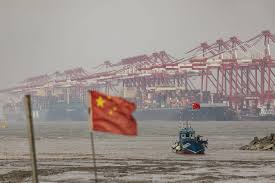
Everyone is an expert now on China. Which to say, everyone has an opinion about China, and the majority of those opinions fall into simplistic Bull or Bear camps.
As someone who has been a student of China for over 50 years, my sense is every claim of expertise has its limits. The more substantial the expertise, the greater the willingness of the expert to confirm the limits of their expertise. The more you know, the sharper your awareness of what you don't know.
Being embedded in a culture makes it difficult to be objective. As an American, I don't claim to be an expert on America; we only learn about being American by going elsewhere and observing, listening and learning from those raised in other cultures.
So rather than discuss China per se, let's discuss the dynamics of mercantilism that play out not just in China but beyond, as they play out in every nation with mercantilist policies.
Mercantilism is rooted in a basic question facing every society: what is the primary source of our prosperity? For nations rich in natural resources, the answer is extracting and exporting these resources to those who lack them. For nations with fertile land, it's growing and exporting grains and other foodstuffs. For nations poor in natural resources, value-adding manufacturing/crafts are an answer.
Every nation manages the balance between investing and consuming the surplus generated by the economy. Every dollar of surplus that's funneled into investing in expanding production of exports is a dollar that isn't spent in the domestic economy. It's a tradeoff: we accept being poor now in order to become rich as exports expand.
Mercantilism is the political-economic-social policy that seeks to increase prosperity by focusing on optimizing profitable exports at the expense of domestic consumption. Rather than consume the surplus, the surplus is invested to increase exports. Wages are kept low to subsidize capital investment.
Mercantilism relies on manipulation of market forces. Mercantilist policy recognizes that the way to reap the biggest gains is to corner the market for whatever is being exported. The ideal way to accomplish this is to sell your exported goods at a loss, making them so cheap that the importer's domestic producers cannot compete on price, so they close down.