










Breaking News
 Mercantilism: China and Beyond
 The Magician, the Martyr, and the 33% Solution: Why Every Trump Poll Slump Requires A Fake...
 'Bitcoin Isn't Going Anywhere': Trump Officials Discuss DOJ, FBI Refocus on Crypto Crime
 The Praxian Genocidal Kill Chain – Part 1
Top Tech News
 His grandparents had heart disease.
At 11, Laurent Simons decided he wanted to fight aging.
His grandparents had heart disease.
At 11, Laurent Simons decided he wanted to fight aging.
 Mayo Clinic's AI Can Detect Pancreatic Cancer up to 3 Years Before Diagnosis–When Treatment...
A multi-terrain robot from China is going viral, not because of raw speed or power...
 The World's Biggest Fusion Reactor Just Hit A Milestone
 Wow. Researchers just built an AI that can control your body...
 Google Chrome silently installs a 4 GB AI model on your device without consent
 The $5 Battery That Never Dies - Edison Buried This 100 Years Ago
 That is not a real fish. IT'S A ROBOT.
 Scientists Unveil Hemp Alternative to Plastic That Can Withstand Boiling Water...
 A Robot Economy: Who Gets Rich, Who Gets Left Behind


AI Is Losing The PR Battle And The Consequences Could Be Huge
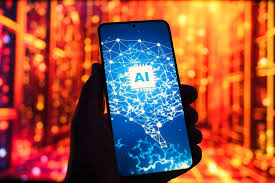
While average commercials strive to show off new products or services or recruit new customers, these AI commercials seem to have a different primary objective. They seem to target goodwill.
Heartwarming commercials show families bonding over AI-generated memories, where AI brings life to old family photos. Emotional voice-overs promise connection, creativity, and even nostalgia. These AI companies are trying to sell people a good reputation.
This strategy should tell us something. Companies don't often spend millions trying to make you feel good about their brand unless they know, deep down, that you don't trust it.
Despite hundreds of billions of dollars pouring into AI development, the industry is quietly losing the battle for hearts and minds. And sentimental advertising is not doing much to fix this problem.
Rare Bipartisan Agreement on AI
A new national survey from Marquette University Law School should give the AI industry serious pause. According to the poll, roughly 70 percent of Americans believe artificial intelligence will do more harm than good for society. Even more striking, the skepticism cuts across party lines.
Poll Director Charles Franklin put it bluntly: "It really is striking … there's pretty much bipartisan skepticism … That's an awful lot of partisan agreement, where we normally see Republicans and Democrats on opposite ends."
In today's political climate, bipartisan agreement on anything is rare. On AI, however, Americans seem united, just not in the way Silicon Valley might hope.
Worse yet is the fact that this poll supports similar findings on AI skepticism from numerous other surveys. A particularly damning NBC News poll from last month showed that AI's net favorability rating ranked lower than nearly every other topic.
Why the Left and Right Don't Trust AI
The industry is up against stiff headwinds in its battle for public trust.
For every story about the potential for AI curing diseases or boosting productivity, there are headlines about job displacement, algorithmic bias, and systems behaving in ways even their creators don't fully understand.