










Breaking News
 VIDEO: Benjamin Netanyahu Just BITCH SLAPPED Trump
 Meanwhile In Scotland...
 The dollar didn't make you rich. It just made everything look more expensive.
 'Starmer Out' Odds (& Gilt Yields) Rise As Embattled UK PM Vows To 'Prove Doubters Wrong
Top Tech News
 New York Mandates Kill Switch and Surveillance Software in Your 3D Printer ...
 Cameco Sees As Many As 20 AP1000 Nuclear Reactors On The Horizon
 His grandparents had heart disease.
At 11, Laurent Simons decided he wanted to fight aging.
His grandparents had heart disease.
At 11, Laurent Simons decided he wanted to fight aging.
 Mayo Clinic's AI Can Detect Pancreatic Cancer up to 3 Years Before Diagnosis–When Treatment...
A multi-terrain robot from China is going viral, not because of raw speed or power...
 The World's Biggest Fusion Reactor Just Hit A Milestone
 Wow. Researchers just built an AI that can control your body...
 Google Chrome silently installs a 4 GB AI model on your device without consent
 The $5 Battery That Never Dies - Edison Buried This 100 Years Ago
 That is not a real fish. IT'S A ROBOT.


Trump goes to Beijing to lock the global door on Iran. But Xi has a back alley open
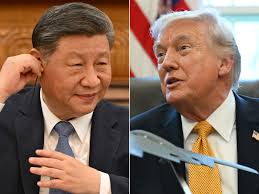
Things aren't that straightforward behind the scenes.
In fact, even before the meetings begin, his attempt to bring back "Maximum Pressure" on Iran seems to be running into a system that has quietly evolved to blunt that very strategy.
In simple terms, even as the US keeps up naval pressure in the Strait of Hormuz and continues what it calls "Operation Economic Fury," there seems to be a vast sanctions-evasion network that has altered the way Iran's oil is sold.
Through Hong Kong-based front companies and a carefully structured barter system, China is now believed to be taking in around 80 to 90 per cent of Iran's oil exports, with Q1 2026 data showing exports surging to a record 2.2 million barrels per day (b/d). As a result, Washington's ability to influence the flow has taken a serious hit.
The architecture behind the workaround
At the centre of this framework is an off-the-books exchange network. In simple terms, it functions as a barter system that removes traditional banking from the equation. Instead of money changing hands, oil is directly exchanged for infrastructure projects and large-scale development work.
As a result, around $8.4 billion worth of Iranian oil revenue in 2024 is believed to have moved through this channel without ever becoming cash in the conventional sense. Instead, it was routed into Chinese-backed projects inside Iran.
"Currently, trade flows between Iran and China are a mix of barter-style mechanisms, infrastructure deals, and closed-loop currency systems designed to bypass the US dollar and the global banking system," says Geeta Kochhar, Senior Assistant Professor of Chinese Studies at Delhi's Jawaharlal Nehru University to Firstpost.
Rather than relying on international bank transfers, Chinese buyers place funds into tightly controlled domestic accounts, including the "Chuxin" mechanism. Those funds are then used to pay Chinese contractors working on major Iranian infrastructure projects, including a $1.2 billion solar power plant and expanded rail links connecting Tehran to the east.