










Breaking News
 VIDEO: Benjamin Netanyahu Just BITCH SLAPPED Trump
 Meanwhile In Scotland...
 The dollar didn't make you rich. It just made everything look more expensive.
 'Starmer Out' Odds (& Gilt Yields) Rise As Embattled UK PM Vows To 'Prove Doubters Wrong
Top Tech News
 New York Mandates Kill Switch and Surveillance Software in Your 3D Printer ...
 Cameco Sees As Many As 20 AP1000 Nuclear Reactors On The Horizon
 His grandparents had heart disease.
At 11, Laurent Simons decided he wanted to fight aging.
His grandparents had heart disease.
At 11, Laurent Simons decided he wanted to fight aging.
 Mayo Clinic's AI Can Detect Pancreatic Cancer up to 3 Years Before Diagnosis–When Treatment...
A multi-terrain robot from China is going viral, not because of raw speed or power...
 The World's Biggest Fusion Reactor Just Hit A Milestone
 Wow. Researchers just built an AI that can control your body...
 Google Chrome silently installs a 4 GB AI model on your device without consent
 The $5 Battery That Never Dies - Edison Buried This 100 Years Ago
 That is not a real fish. IT'S A ROBOT.


Trump-Xi meet more about US uncertainty than China ambition
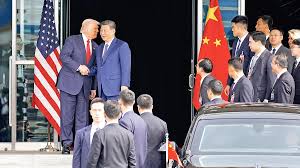
When President Donald Trump arrives in Beijing this week for talks with Chinese President Xi Jinping, the choreography will almost certainly be familiar: firm handshakes, oversized rhetoric, carefully calibrated symbolism and declarations about "historic" economic opportunities.
But beneath the spectacle will lie a much more consequential reality for Asia. Trump's return to office has not produced a coherent new Indo-Pacific doctrine so much as a louder, more transactional version of America's existing strategic anxieties.
Washington continues to frame China as its principal competitor, but increasingly through the language of tariffs, industrial rivalry and economic punishment rather than sustained alliance-building or regional institution-making.
For much of the past decade, successive US administrations described the Indo-Pacific as the center of geopolitical gravity. Barack Obama's "pivot to Asia" sought to reassure allies that Washington recognized the region's growing strategic importance.
Joe Biden expanded that framework through mini-lateral security partnerships, technology alliances and diplomatic engagement designed to counterbalance China's rise without triggering outright confrontation.
Trump's second term represents a notable departure. The administration has preserved much of Washington's hard-line rhetoric toward Beijing, but without the broader diplomatic and economic framework that once reinforced US credibility across the Indo-Pacific.
Instead, Trump 2.0 has leaned heavily on economic nationalism, tariff threats and demands for greater burden-sharing from allies already grappling with rising geopolitical and financial uncertainty.
Despite claims of strategic renewal, the approach largely repackages longstanding anxieties about China into a more confrontational doctrine driven by trade escalation, economic coercion and increasingly incendiary rhetoric over global competition.
Regional governments increasingly view Washington through a transactional lens. Allies and partners hear repeated demands to decouple from Chinese supply chains while simultaneously confronting new tariffs, industrial policy disputes and uncertainty about long-term American commitments.