










Breaking News
 Tucker Carlson Warns That The Israeli Government Has Sent Clear Signals...
 Your Car Was Never the Target
 JUST IN: Tucker Carlson Joins Alex Jones LIVE At 1PM CT To Break MASSIVE NEWS!
 The Evil Within, Part 1: The National-Security State
Top Tech News
 World's first consumer wing-in-ground effect aircraft takes flight
 America's Military Readiness Depends On Deployable Nuclear Power
 License Plate Cameras Are About To Start Tracking A Lot More Than Just Your Car
 Heads up: Apparently the government is hiding cameras inside fake utility boxes
 Sodium Batteries And EVs That Power The Grid: Inside GM's Big Energy Push
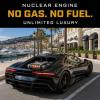 NUCLEAR ENGINE - UNLIMITED LUXURY - 20 YEARS WITHOUT REFUELING
 China Unveils Nuclear-Powered Floating Hub For Green Shipping
 China Launches World's 1st Commercial Brain Chip, Beating Elon Musk's Neuralink!
 Modular next-gen US nuclear reactor goes critical
 How EMF's cause disease


Critical Minerals Supply Chain Under Siege Amid Geopolitical Tensions
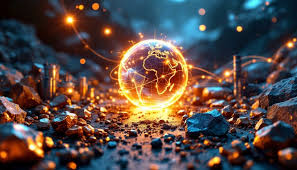
The metals with the highest melting points aren't trivia. They're the materials that make hypersonic weapons, jet engines, AI chips, and nuclear reactors possible.
And every one at the top of that list is now contested supply.
???? Tungsten — 3,422°C | The hardest metal known. Used in armor-piercing rounds, kinetic penetrators, drill bits, hypersonic nose cones. China controls ~80% of global supply. Beijing narrowed exports to just 15 licensed firms in 2025. By April 2026, tungsten was elevated into the Critical Minerals Top 5 globally.
???? Rhenium — 3,186°C | The metal that makes single-crystal turbine blades possible. Without it, no F-35, no F-22, no B-21. Global production: ~50 tonnes per year. Added to the 2026 Critical Minerals Watchlist in April.
???? Tantalum — 3,017°C | The capacitor metal. Inside every smartphone, every missile guidance system, every defense electronic. DRC sourcing makes it a "conflict mineral."
???? Hafnium — 2,233°C | The quiet kingmaker. Nuclear reactor control rods. Jet engine alloys. And the gate oxide layer in every advanced AI chip. No dedicated mines exist — produced 1:50 against zirconium. Price: $4,730/kg. Up 115% in 2025.
???? Niobium — 2,477°C | High-strength steel for pipelines, bridges, jet engines. Brazil (CBMM) controls ~85% of global supply.
The strategic picture in 2026:
→ October 2025 — China expanded export controls on rare earths and dual-use materials. Within weeks, the US and Australia signed an $8.5 billion Critical Minerals Framework Agreement.
→ The G7 launched a Critical Minerals Production Alliance. The US is backing a $700M tungsten project in Kazakhstan, rare earth refining in Mozambique, and seabed minerals research with allies.
→ More than half of energy-related critical minerals are now under some form of export control globally .
Three things this means for capital allocators:
1. Critical minerals are no longer a commodity story. They are a sovereign security story. Pricing now reflects geopolitical access.
2. The "Top 5" defense metals — tungsten, rhenium, hafnium, tantalum, niobium — are produced in a handful of countries, often as byproducts. There is no quick fix. A jet engine plant cannot pivot suppliers in 12 months. Neither can a chip fab.
3. Family offices and sovereigns are already building strategic equity positions in upstream mining (Almonty Industries, CBMM, Lynas), midstream processing (LKAB, MP Materials), and recycling (urban mining of tungsten carbide and platinum group metals). The 21st will be won by whoever controls the metals that don't melt.