










Breaking News
 Outrage: High School Hands Out Qurans to Students -- But Bans the Bible...
 Indicting Raúl Castro could set up US military action in Cuba
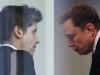 Musk v. Altman week 3: Elon Musk and Sam Altman traded blows over each other's credibility...
 Ex-CENTCOM chief headlines lavish Israeli-American Council gala
Top Tech News
 US To Develop Small Modular Nuclear Reactors For Commercial Shipping
 New York Mandates Kill Switch and Surveillance Software in Your 3D Printer ...
 Cameco Sees As Many As 20 AP1000 Nuclear Reactors On The Horizon
 His grandparents had heart disease.
At 11, Laurent Simons decided he wanted to fight aging.
His grandparents had heart disease.
At 11, Laurent Simons decided he wanted to fight aging.
 Mayo Clinic's AI Can Detect Pancreatic Cancer up to 3 Years Before Diagnosis–When Treatment...
A multi-terrain robot from China is going viral, not because of raw speed or power...
 The World's Biggest Fusion Reactor Just Hit A Milestone
 Wow. Researchers just built an AI that can control your body...
 Google Chrome silently installs a 4 GB AI model on your device without consent
 The $5 Battery That Never Dies - Edison Buried This 100 Years Ago



Musk v. Altman week 3: Elon Musk and Sam Altman traded blows over each other's credibility...
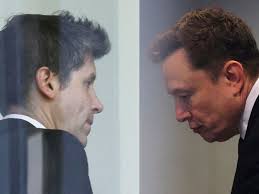
The trial spilled plenty of dirt—and raised more questions than answers about how the AI giant should be governed.
In the final week of the Musk v. Altman trial, lawyers traded blows over Elon Musk's and OpenAI CEO Sam Altman's credibility. Altman was grilled on his alleged history of lying and self-dealing involving companies that do business with OpenAI. But he fired back, painting Musk as a power-seeker who wanted to control the development of artificial general intelligence (AGI)—powerful AI that can compete with humans on most cognitive tasks.
As evidence of their commitment to AI safety, OpenAI brought out a golden trophy of a donkey's ass that was gifted to an employee after he was called a "jackass" for standing up to Musk's plans to race toward AGI.
Lawyers for both sides also presented their closing arguments, floating unflattering mugshot-style photos of Musk and Altman next to each other on a giant screen. Musk's lawyer Steven Molo argued that Altman and OpenAI president Greg Brockman broke their promise to use money Musk donated to maintain OpenAI as a nonprofit that develops AI for the benefit of humanity. Instead, they created a for-profit subsidiary that made them extraordinarily wealthy.
OpenAI's lawyer Sarah Eddy argued that Altman and Brockman never promised to keep OpenAI a nonprofit. She added that even though it's been restructured, OpenAI remains a nonprofit dedicated to developing AI safely.
She claimed that Musk sued too late—and that his real motive is to sabotage a competitor to his own AI company, xAI, which he launched in 2023.
Musk is asking the court to unwind the 2025 restructuring that converted OpenAI's for-profit subsidiary into a public benefit corporation and to remove Altman and Brockman from their roles. He is also seeking as much as $134 billion in damages from OpenAI and Microsoft, to be awarded to OpenAI's nonprofit.
The jury will begin deliberating on Monday and deliver an advisory verdict as soon as next week. The jury verdict is not binding on the judge, who will decide the case.
If the judge rules in Musk's favor, it could upend OpenAI's race toward an IPO at a valuation approaching $1 trillion. Meanwhile, xAI is expected to go public as a part of Musk's rocket company SpaceX as early as June, at a target valuation of $1.75 trillion.
Musk the power-seeker, Altman the liar.
In the first week of the trial, Musk said he was suing to save OpenAI's mission to build AI safely for the benefit of humanity. This week, Altman denied Musk was a paladin of AI safety and painted him as a power-seeker who wanted to control OpenAI.
Altman told the jury that in 2017, when Musk and other cofounders were discussing creating a for-profit arm, they asked Musk what would happen to his control over such an entity if he died. "Maybe the control of OpenAI should pass to my children," Musk said, according to Altman.