










Breaking News
 Hard Choices...
 WHO Kills MAHA-Backed Hepatitis B Baby Vaccine Trial
 Lula Leads After Last-Minute Voting Extension As "Bolsonaro Trade" Implodes
 Grok Bot Tutorial: Beginner to Genius (Full Walkthrough)
Top Tech News
 Modular phone promises total privacy at the flick of a switch
 Genetically Engineered War Dogs for 134 Pound Cyborg Dire Wolves Now – Later 600 Pound Wolves
 They're Quietly REPLACING Our Food With THIS… And Nobody Is Talking About It!
 Chicago Opens First "Teacher-Free" AI School as Global Push Accelerates
 Solar Panels Are Doing Something Nobody Expected
 DeLorean climbs skyward to race electric flying cars
 Atari's 800XL returns with a keyboard, cartridges and BASIC
 Bioinspired robot airdrops into remote waters via morphing wing-sail
 Anduril interceptor adapts to emerging threats via swappable stages
 I Built a Website to Expose Solar and Battery Scams


General Atomics pushes ahead with self-fueling nuclear fusion tech tests
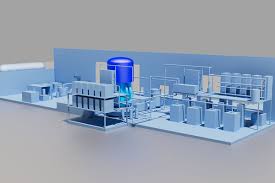
Though it always seems to be 25 years away no matter what calendar you look at, the potential payoff of a practical fusion reactor is so earth-shattering that there is tremendous incentive to pursue the technology. The thing is, the problem isn't just creating a nuclear fusion reaction – any halfway decent physics lab can do that on a benchtop. The real trick is to build a commercial reactor that is net-energy positive and practical.
Aside from coming up with a reactor design that can steadily produce more energy than it consumes, fusion reactors must be able to turn that energy into power. They must also withstand the immense stresses produced by powerful magnetic fields, extreme heat, and the intense neutron radiation caused by the fusion process.