










Breaking News
 Tesla Cybercabs and Superchargers Will Act as Mini Cell Towers for SpaceX Starlink
 Are Drone Swarms Going to Enable Big Land Gains in the Ukraine War ?
 THIS is a 'TEST OF WILLS': Victor Davis Hanson
 The Houthi blockade puts Trump in a serious bind
Top Tech News
 Elon Vows AI-Made 'Odyssey' After Blasting Nolan's Take On Homer
 Anthropic is launching its own drug discovery programs for rare diseases using Claude...
 SpaceX AI Satellites Will Have 250 Kilowatts of Power
 Chinese researchers have developed a sodium-metal battery that can fully charge in just 4 minutes...
 SpaceX Starship Flight 13 in 3 Days - Thursday July 13
 Chinese Scientists Develop Nuclear Battery Using Carbon-14
 Teleoperated humanoid robots complete first-ever live surgery
 Floating capsule auto-disinfects water without chemicals or battery
 Modular Reactors To Solve Data Center Hysteria?
 DeepSeek Developing In-House AI Chip In Bid To Cut Nvidia Reliance



Better Cars – Worse Drivers
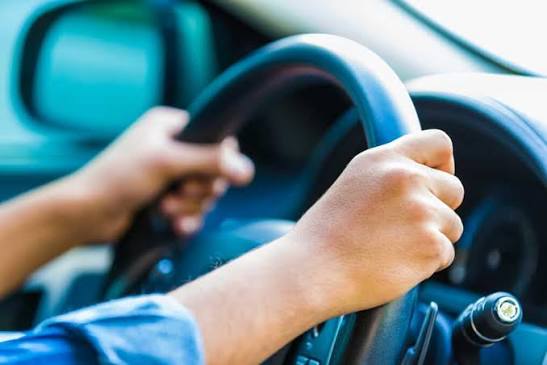
Maybe the same sort of thing is playing out on the road. Cars have never been easier to drive yet it seems people are having a hard time driving them.
Competently, that is.
Here's a sample to make the point:
The driver – if you want to call him that – could not keep his late-model car in its travel lane. He repeatedly swung wide – off onto the shoulder – and then over-corrected across the double yellow. Is it that difficult to center a modern vehicle in between the lanes? Fifty years ago, when the typical car – especially the typical American car – had overboosted power steering and a primitive, literally truck-like suspension system (solid axle, leaf springs) and not-especially-grippy tires – it did take more skill to keep the thing in its travel lane, especially if you were moving fast. Today, people who drive slow – in cars such as the one in this video, that have precise steering, grippy tires and much more competent suspensions (along with lots of "assistance" systems) have great difficult keeping their cars within the travel lane.
My hypothesis is that there's a relationship – and inverse one – between the increased capabilities of cars and the decreasing abilities of drivers. Basically, it is centered on this premise: Expect less of drivers and you will get worse drivers. There is also something more. It is the implicit assumption of incompetence that attends the proliferation of "assistance" systems. The word speaks for itself. A driver who needs "assistance" is by definition someone who is not fully capable. This begs a question almost no one seems to ask, which is whether it's a desirable thing to have lots of drivers who need "assistance" behind the wheel of potentially very dangerous things? Lawn darts – if you remember them – got taken off the market because kids would sometimes throw these heavy, metal tipped things up into the air as hard as they could. Then they would come down. Sometimes, someone might be standing where they came down.
No one – back then – thought to fit the lawn darts with "technology" that would prevent them from impaling someone when they descended back to earth.
On the other hand, rather than take the lawn darts away from everyone, maybe the right approach would have been to train the kids in their safe and responsible use. Kids can be trained to safely and responsibly handle far more potentially dangerous things, such as firearms. They used to be – and on account of that, what is styled "gun crime" was exceedingly rare. It is now more common because lots of kids are not trained to be safe and responsible around guns but have access to guns because their parents are irresponsible. Or just not there.