










Breaking News
 Ex-CIA Agent Speaks Out: JFK, 9-11, UAPs, MLK, MKUltra & Everything Trump Is Hiding
 China takes satellite race with SpaceX to sea
 The Low-T Issue
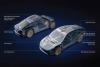 Tesla Cybercabs and Superchargers Will Act as Mini Cell Towers for SpaceX Starlink
Top Tech News
 Elon Vows AI-Made 'Odyssey' After Blasting Nolan's Take On Homer
 Anthropic is launching its own drug discovery programs for rare diseases using Claude...
 SpaceX AI Satellites Will Have 250 Kilowatts of Power
 Chinese researchers have developed a sodium-metal battery that can fully charge in just 4 minutes...
 SpaceX Starship Flight 13 in 3 Days - Thursday July 13
 Chinese Scientists Develop Nuclear Battery Using Carbon-14
 Teleoperated humanoid robots complete first-ever live surgery
 Floating capsule auto-disinfects water without chemicals or battery
 Modular Reactors To Solve Data Center Hysteria?
 DeepSeek Developing In-House AI Chip In Bid To Cut Nvidia Reliance



Tesla Cybercabs and Superchargers Will Act as Mini Cell Towers for SpaceX Starlink
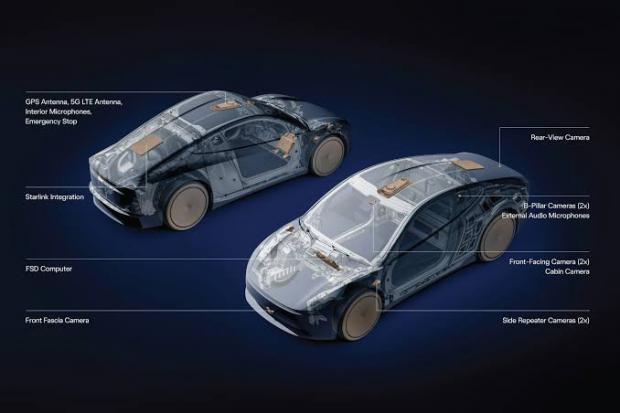
SpaceX can make its own small cell systems at supercharger sites and on cybercabs. Another problem with the Dish Wireless system was that it was not every good and incoomplet. It could not get into many buildings. It lacks the needed densification.
Starlink small-cell integration using Supercharger sites and Cybercabs (with vehicle Starlink) is how SpaceX and Tesla will likely deploy a direct to cellphone system. It leverages assets they already own or control, eliminates traditional tower-company rents, and pairs naturally with the factory Starlink V5 integration now confirmed in Cybercabs (and planned for broader Tesla vehicles).
SpaceX should buy the CBRS band spectrum from Echostar to make the small cell strategy work better and faster. Citizen band radio spectrum would let small cells interlink more easily.
1. Supercharger sites as fixed small-cell hosts
Tesla operates roughly 8,400–8,500 Supercharger stations globally with ~80,000 stalls (U.S. portion ~3,000 stations / 37,000+ stalls as of mid-2026). This is still growing quickly.
These are high-value locations at highways, urban edges, retail parking, travel corridors.
Each site can host one or more outdoor small cells (pico or micro).
Typical outdoor small-cell range is 200–2,000 meters depending on power, spectrum (CBRS ideal), height, and frequency.
3,000 U.S. sites could create meaningful corridor and suburban capacity layers—especially along interstates and in secondary cities—without trying to blanketed dense urban cores.
Incremental densification is easy by starting with high-traffic Superchargers and expanding.
Economics (major advantage) Hardware + install for a modern outdoor small cell is typically $5k–$30k (far below a macro).
Power isessentially free at the margin. Superchargers already have high-capacity electrical service (hundreds of kW to multi-MW). Adding a 5–20 W or even 5–10 W small cell is negligible.
Backhaul can be done by Starlink (internal transfer pricing, low marginal cost). No fiber trenching required in most cases.
Site lease / tower rent would be free $0. Tesla owns or controls the real estate and vertical assets. Traditional macro or small-cell deployments often pay $1,000–$5,000+ per month to tower companies or landlords.
Result dramatically lower TCO and faster payback than conventional densification. Capacity can be added precisely where Tesla already has presence and power.