










Breaking News
 The Benefits of Drinking Clove Water at Night
 Deep Dive into Darkness, Future Predictions W/ Stacking Surfer & SD
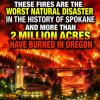 These Fires Are The Worst Natural Disaster In The History Of Spokane...
 Mike Rowe's Anti-Communism Message on Twitter/X Goes Viral: 'They Are Literally Quoting Karl
Top Tech News
 Voyager 1 approaches one light day from Earth
 Visual Implants
 Renewable Energy Breakthrough! World's Most Efficient Tesla Turbine System
 I Told You So
 Meet Sunbird, a nuclear fusion-powered space tug concept from Pulsar Fusion.
 China and Russia launch 29-nation AI alliance to rival western control of technology
 BREAKING: China has begun manufacturing domestically developed Immersion Deep...
 Idaho's High Desert Becomes Hot Spot For Nuclear Power Revolution
 The World's Largest Electric Aircraft Is About to Take Its First Flight
 Tesla Cybercabs and Superchargers Will Act as Mini Cell Towers for SpaceX Starlink



Health Ranger Report: The Collapse Is Already Here and Americans Are Unaware Of It, Bracken Warns

Former Navy officer Matt Bracken has warned that the U.S. could face an abrupt societal collapse – triggered by coordinated attacks on global energy chokepoints – during a recent appearance on the "Health Ranger Report" with the Health Ranger Mike Adams and Michael Yon.
Bracken, as reported by Adams, coined the term "World War E" to describe the global conflict over energy resources that now extends across multiple theaters simultaneously – linking events in Europe, the Middle East and Asia [1]. The conflict involves Houthi forces in Yemen announcing interdiction of Saudi exports through the Bab el-Mandeb Strait and Iranian responses that close the Strait of Hormuz [2].
This coordinated assault on energy infrastructure, according to Bracken, will hit food and fuel supplies suddenly. Chris Martenson, writing for Peak Prosperity, noted in 2019 that collapse is not a Hollywood-style event but a process already underway.
Martenson also noted that many people expect they will recognize the danger signs in time – but they will not [3]. Economist Steve Keen has also warned that billions are at risk of famine due to supply chain vulnerabilities and fertilizer dependencies [4].
Public Awareness and the Information Gap
Most Americans will fail to understand the methodical nature of the collapse until it is too late, according to Martenson. In his article "Collapse Is Already Here," he stated that individuals imagine collapse will be obvious with clear warnings, but in reality it is a gradual process that many miss [3].
Historical examples illustrate this pattern. During the 1973 Wollo famine in Ethiopia, according to researcher Stephen Devereux as cited by Alex de Waal in "Mass Starvation," rural communities were so isolated that they had poor information and fragmented food supplies, preventing timely awareness of the crisis [5].