










Breaking News
 Another TACO – Iran's Need To Escalate
 The Coming Precious Metals Shock Could Reshape the Global Economy
 Why Do Americans Continue to Hew to Statism?
 Half Of Foreign Welfare Recipients In Spain Are Moroccan
Top Tech News
 Voyager 1 approaches one light day from Earth
 Visual Implants
 Renewable Energy Breakthrough! World's Most Efficient Tesla Turbine System
 I Told You So
 Meet Sunbird, a nuclear fusion-powered space tug concept from Pulsar Fusion.
 China and Russia launch 29-nation AI alliance to rival western control of technology
 BREAKING: China has begun manufacturing domestically developed Immersion Deep...
 Idaho's High Desert Becomes Hot Spot For Nuclear Power Revolution
 The World's Largest Electric Aircraft Is About to Take Its First Flight
 Tesla Cybercabs and Superchargers Will Act as Mini Cell Towers for SpaceX Starlink



Progressives Want a French Revolution, Not an American One
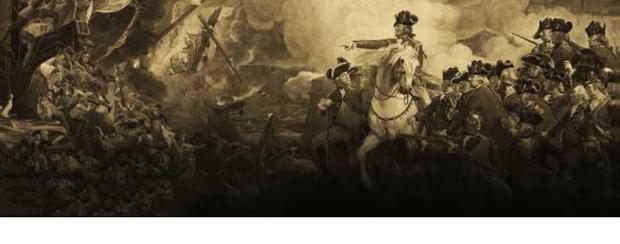
A political revolution is a fundamental change in society that sweeps away the old establishment. And the goals of Progressives are revolutionary; they would fundamentally change America with little left of the current culture. Progressive goals include socio-economic equality, defund or eliminate the police, universal single-payer medical care, bleed the rich, and dismantle capitalism. They would gut almost every institution of society and reconstruct them according to a socialist-communist vision.
I do not believe a Progressive revolution will occur but, if it does, it will resemble the French Revolution far more than the original American one.
The American and French Revolutions have commonalities. They occurred in close proximity — 1776 and 1789, respectively. French radicals openly admired the American Revolution as a popular uprising that proved monarchy could be overthrown and replaced by a system of the people; they were inspired by it. The American Declaration of Independence and the French Declaration of the Rights of Man both draw on Enlightenment thinkers such as John Locke and Jean-Jacques Rousseau. Both express similar ideals of natural rights, equality before the law, and governance by the people. The similarities are not coincidental. Trans-Atlantic communication flowed freely between radicals on both sides of the Atlantic before, during, and after the the two revolutions, with Benjamin Franklin assuming the first U.S. ambassadorship to post-revolutionary France.
The reasons a Progressive revolution would be French-style, not American, resides in the differences between the two revolutions.
First is the issue of class warfare. The American Revolution aimed at throwing off an external enemy (Britain) and it succeeded, in large part through military conflict. The defeated British left. To the extent the revolution was an internal conflict, American Loyalists were "the enemy" because they embraced British rule; faced with severe persecution, the Loyalists left en masse. After the Constitution was implemented, America began to slowly recover from the devastation of the Revolution and its aftermath. Post-revolutionary America maintained much the same social and economic structure as it had before, however. It was the political structure that changed dramatically because the American Revolution was basically a political one.
By contrast, the French Revolution consisted of internal class warfare. In pre-revolutionary France, society had three rigid categories: the first estate or clergy; the second estate or nobility; and, the third estate or commoners who constituted about 98% of the people. A person's legal rights, taxes, access to opportunity, social status, and political power were dictated by the class to which he belonged. The first two estates held immense and untaxed wealth. The third was heavily taxed, without basic legal or political rights. Thus the French Revolution entirely dismantled the structure of society in order to impose a new vision. The Catholic Church was stripped of wealth and power, for example. Aristocrats who did not escape were often executed. Eventually, France began to recover according to an utterly new blueprint of society. But the gutting of old society and the ensuing Reign of Terror created a political instability that led to the Emperor Napoleon Bonaparte and the exhaustion of Europe through military campaigns. After Napoleon, Louis XVIII assumed the throne and monarchy returned … briefly.
In terms of class warfare and predictable instability, the Progressives are more aligned with the French Revolution than the American one.
Their enemy is internal: capitalists, conservatives, moderate liberals, libertarians, the religious, the rich, and anyone else who is status quo. Like the French revolutionaries, Progressives view society through a class lens — one inherited from Marxism. At times, the social divide is stated as labor versus capital or the disempowered versus the ruling elites or corporate class. Sometimes, a third category is added — managers who are educated administrators wielding power over labor. As with the French radicals, the Progressives's enemies are internal and the way to achieve social justice is through the forced redistribution of wealth and power. The theorists and political leaders of the Revolution were and the Progressives are from rich and educated backgrounds, with the commoners becoming the brute force, the enforcement arm. They are willing to assassinate egregious enemies, like Trump and Charlie Kirk, and to use mob violence, like attacking government buildings and the police, which is a reminiscent shadow of storming the Bastille.
A successful Progressive Revolution would probably produce much the same dynamic as the French one did. Select Progressives would wield authority with power struggles erupting between them. In society at large, there would be mass purges and the destruction of core institutions — the U.S. Supreme Court, for example — which would throw society into chaos. Violence would be inevitable both in executing Progressive programs and in resistance to them. It is not clear what would arise from the instability but history teaches that revolutions and instability rarely result in greater freedom.