










Breaking News
 Rebuilding America After the Great Betrayal
 The World Is Watching You: The Coming Technological Dystopia | Ep 3
 Due To Depleted Missile Supply, 'Operation Epic Fury' Downgraded To...
 Copper Imports Surge the Most in 12 Years in Tariff Front-Running Move
Top Tech News
 Shade-Resistant Solar Cells Retain 97% Efficiency After 2,000 Hours of Testing
 20 Ancient Engineering SECRETS
 Stonehenge Was Reanalyzed by AI -- And the Findings Are Hard to Explain
 After Years Of Delays, Aptera Is Finally Preparing To Build Customer Cars
 'When you kill it, it doesn't die': the jellyfish that has cracked the secret of immorta
 Archer Aviation debuts Halo autonomous VTOL, Thunder's commercial twin
 US Telecoms Slide On Starlink Mobile Threat; Bernstein Sees It As A "Jab, But No Knockout Yet**
 Betavolt unveils revolutionary coin-size battery with nickel-63 nuclear isotope...
 China claims it has built a 'nuclear drone' that can stay airborne forever
 Canada just solved two giant infrastructure problems at exactly the same time.



What the Olympics Really Cost: Rio's 10-Year Legacy of Debt and Destruction
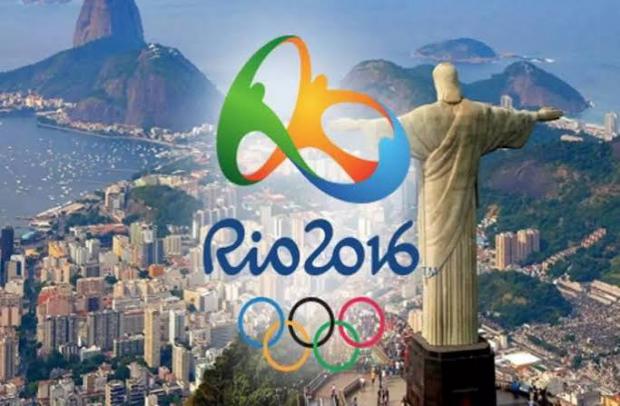
The Rio Olympics of 2016 had millions of Americans tuned in and cheering on swimmer Michael Phelps, who earned his twenty-eighth Olympic medal and his twenty-third gold. Those same fans were thrilled with the power and grace of Simone Biles, who secured a team gymnastics gold along with three more individual golds. In my home, attention was elsewhere.
My wife, who was born and raised in Brazil, had just one thing on her mind: redemption. Two years before, Mineiraço ("the trauma at Mineirão") — the Brazilian men's stunning 7–1 World Cup loss to Germany — had scarred the nation's sporting psyche. Winning gold on their home soil, sealed by Neymar Jr.'s decisive penalty kick, was a powerful salve on the still-open national wound. Days later, the Brazilian men overpowered Italy in volleyball to secure the gold, capping an unforgettable Olympics for the host nation.
Brazilians saw victories on the pitches and courts but the political economy of Olympic hosting was another matter. Rio's Olympics were a story of corruption, cost overruns, and economic waste the nation could ill afford.
Rio's complicated Olympic legacy showcases crony capitalism, and the damage resulting from politically driven malinvestment. At the center of the former was a corruption investigation known as Operation Car Wash (Lava Jato). The joint effort between Brazilian and French investigators uncovered a vast web of massive bribery and kickbacks that would eventually lead to the imprisonment of high officials with connections to the national government. Members of the Brazilian Olympic Committee were sentenced for bribery, embezzlement, and more.
The rot reached back to the awarding of the games themselves: Rio's governor, Sergio Cabral, later confessed to facilitating over $2 million in bribes to secure votes over rival bids from Chicago, Madrid, and Tokyo. Cabral wasn't alone in the scheme. Carlos Arthur Nuzman, then-head of the Brazilian Olympic Committee, was convicted for the internal negotiations that secured the deal.
For their crimes, Cabral and Nuzman were sentenced to 10 and 30 years in prison, respectively. In March 2024, however, these sentences were annulled by a Brazilian federal court, claiming that the earlier convictions were outside the jurisdiction of the judge, Marcelo Bretas, who presided over the trial. While Nuzman walks free, Cabral remains in prison, facing sentences of more than 400 years for other crimes. The same appeals court that released Nuzman also overturned the conviction of Brazil's current president, Luiz Inácio "Lula" da Silva, who was also found guilty of crimes in the Lava Jato operation.
One of the main beneficiaries of the winning bid was the Brazilian construction giant Odebrecht and its petrochemical arm, Braskem. Odebrecht oversaw over half of the building contracts, later found to have been facilitated by an in-house bribery operation, cravenly called the "Division of Structured Operations." Its then-president, Marcelo Odebrecht, served just two and a half of a nearly 20-year sentence for corruption, and was released in 2017. This shortened sentence was part of a plea deal in which he admitted to paying nearly $800 million in bribes for construction contracts throughout Latin America, but in particular for Olympic-related construction deals. In December of 2016, lawyers for Odebrecht pleaded guilty, agreeing to a fine of $3.5 billion to satisfy prosecutors in the US, Brazil, and Switzerland for additional international bribery schemes. At the time, it was the largest international bribery settlement in history.