










Breaking News
 Spokane Fire: Prepping Our Equipment to Head Out
 80x Bigger Than Enron: $5.1 Trillion Fraud That Can Collapse Treasuries, Spark Civil War
 Amish community fined nearly $500,000 for failing to download ArriveCan app
 Iran Issues Six Demands on the US to Re-Open the Strait
Top Tech News
 What could possibly go wrong? Scientists use AI to design new viruses
 Dual-motor suitcase drive underpins 3,000-hp hypercar
 DoorDash Wins Federal Approval To Fly Its Own Delivery Drones
 Shade-Resistant Solar Cells Retain 97% Efficiency After 2,000 Hours of Testing
 20 Ancient Engineering SECRETS
 Stonehenge Was Reanalyzed by AI -- And the Findings Are Hard to Explain
 After Years Of Delays, Aptera Is Finally Preparing To Build Customer Cars
 'When you kill it, it doesn't die': the jellyfish that has cracked the secret of immorta
 Archer Aviation debuts Halo autonomous VTOL, Thunder's commercial twin
 US Telecoms Slide On Starlink Mobile Threat; Bernstein Sees It As A "Jab, But No Knockout Yet**



Painless microneedle tattoos from London startup CipherX
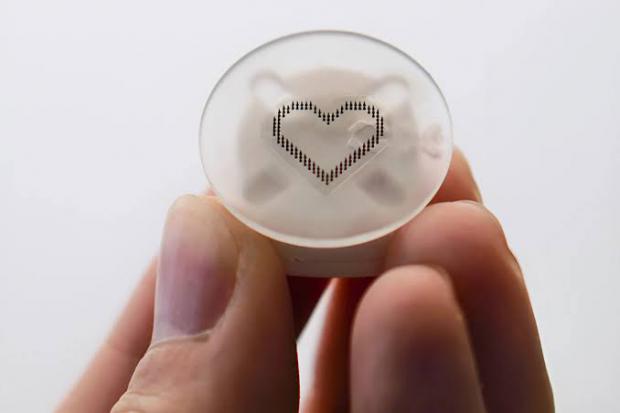
We've previously covered some new tattoo technologies, but they still rely on conventional needles. CipherX takes a completely different approach and promises pain-free tattoos by replacing the traditional tattoo machine with a microneedle patch.
At the heart of CipherX's technology is a small patch filled with hundreds of microscopic biodegradable needles, each preloaded with pigment. Think of it as a stamp that presses into the top layer of your skin, and deposits pigment instead of puncturing the skin thousands of times. Because the microneedles are shorter than one millimeter, the process is significantly less uncomfortable than a conventional tattoo.
Co-founder Ferdinand Kohle describes the device as "a hybrid between a traditional tattoo, a medical patch, and a wearable interface," and this captures the inspiration behind the product quite well. Microneedle patches are not a new idea. For decades, they've been used to deliver vaccines, insulin, hormone treatments, and other medications through the skin. CipherX utilizes the same concept but uses ink instead of drugs.
Although the application method is very different from that of a conventional tattoo machine, the result is the same: a permanent tattoo. According to the company, a CipherX microdot tattoo heals like a conventional one and also requires the same aftercare: avoid direct sun, soaking in water, scratching, and abrasive clothes and jewelry.
The application device is not sold directly to customers, as using it requires some training. For now, CipherX tattoos are available only at the company's pop-up events, and by an appointment at its recently opened London studio.
An appointment takes between 25 and 30 minutes. Securing the patch with a special applicator takes about five minutes, then it has to remain in place for another 15 minutes while the microneedles dissolve and release the pigment. The tattoo is visible immediately after the patch is removed. It may appear slightly faded at first, but it becomes darker over the following 24 to 48 hours.
The biggest limitation, at least for now, is design selection. The current patch canvas is a circle measuring 15 mm in diameter, so the 13 available options are pretty minimalistic and available only in black. They include a flower, a star, a cross, a circle, and a few variations of a heart. CipherX charges £50 (about US$67) for any of the available designs. As for custom designs, they may become available in the future.
Another limitation is placement. Because the patch requires a relatively flat surface for better contact with the skin, it cannot be applied to certain parts of the body, such as the wrists, ankles, or hands.