










Breaking News
 Dr. Sam Bailey: The REAL Reasons Why You Get Sick (It's Not a Virus)
 The Bride of Farmer...
 "What the Marxists never really quite figure out is that once they've achieved their goals.
 Trump willing to exit Iran war without nuclear deal if Hormuz reopens: Report
Top Tech News
 EG4 Power Pro VS Ruixu Lithi VS Yixiang Budget Battery! Best Selling Battery Showdown!
 Insect wings can kill bacteria without any chemicals!
 5th Small Modular Reactor Validated Since June, Poised For Mass Production
 Tesla Never Made An Electric Jet Boat, So This YouTuber Built One Himself
 What could possibly go wrong? Scientists use AI to design new viruses
 Dual-motor suitcase drive underpins 3,000-hp hypercar
 DoorDash Wins Federal Approval To Fly Its Own Delivery Drones
 Shade-Resistant Solar Cells Retain 97% Efficiency After 2,000 Hours of Testing
 20 Ancient Engineering SECRETS
 Stonehenge Was Reanalyzed by AI -- And the Findings Are Hard to Explain



US weighs tactical nukes as China, Russia raise escalatory stakes
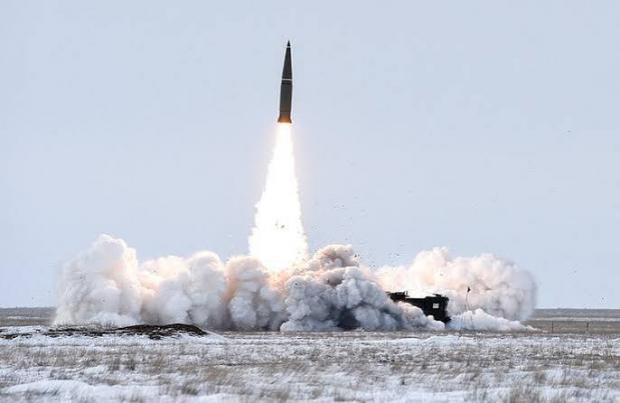
The US may be entering a period of significant nuclear reassessment as it confronts a growing mismatch between its predominantly strategic arsenal and adversaries increasingly prepared for limited nuclear use.
This month, Breaking Defense reported that the US Department of Defense (DoD) has initiated a review of the nation's nuclear posture to expand tactical nuclear strike options for the White House.
Undersecretary of Defense for Policy Elbridge Colby confirmed the re-examination of nuclear employment guidance, citing the need for "rational nuclear options" in response to potential regional conflicts with China or Russia.
The policy review comes amid longstanding US DoD concerns over foreign developments in low-yield warheads, which risk leaving the US without proportional non-strategic responses.
US Strategic Command head Admiral Richard Correll explained that while declaratory policy remains unchanged, the military seeks "escalation maneuver" space across non-kinetic, conventional and limited nuclear domains. The review will remain classified.
At present, the US nuclear arsenal and modernization program remain heavily weighted toward strategic forces over tactical nuclear weapons. Strategic nuclear weapons are designed to destroy an adversary's war-making capabilities, namely its military, economic, political and population centers of gravity.
Strategic nuclear weapons encompass intercontinental ballistic missiles (ICBMs), strategic bombers, and nuclear ballistic missile submarines (SSBNs), designed to hit targets deep in an adversary's territory.
In contrast, tactical nuclear weapons are designed to destroy an adversary's war-fighting capabilities. These weapons could be deployed against enemy bases and force concentrations to gain a battlefield advantage.
Such weapons may include those deployed from dual-capable fighter aircraft (DCA), heavy artillery, tactical ballistic missile systems and ship- or submarine-launched cruise missiles.
March 2026 data from the Bulletin of the Atomic Scientists show that the US nuclear arsenal remains overwhelmingly structured around long-range strategic weapons, which comprise roughly 94% of all actively deployed warheads.
According to the data, of the US's 1,770 deployed warheads, approximately 1,670 are assigned to the strategic triad — comprising land-based ICBMs, submarine-launched ballistic missiles (SLBMs), and strategic bombers — while non-strategic weapons account for only 100 tactical gravity bombs stationed in Europe.
The Bulletin of the Atomic Scientists report points out that the US's multi-billion-dollar modernization priorities heavily favor strategic program overhauls, including Sentinel ICBMs, Columbia-class SSBNs and B-21 Raider stealth bombers, leaving tactical nuclear weapons as a small, specialized component of overall US nuclear posture.