










Breaking News
 Florida's Skies Are About to Get Crowded -- DeSantis Puts Real Flying Cars in the Air by...
 'New' Iran Demands Repeat MoU Conditions
 China's Gold Buying Is Not Simply a Bet Against the Dollar
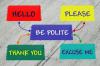 "Niceness As Whiteness": Professors Denounce Politeness As Privilege
Top Tech News
 If They Were Human, They'd Be Arrested. Experts Respond To Rogue AI Breaches
 Sodium Ion Batteries Will be 80% Cheaper & Last LONGER!
 German startup SAXON Q has introduced a diamond-based quantum computing system...
 Elon Musk To Build The Largest Building In The World - 100 Million Square Feet
 Bitcoin 'Red Team' Says AI Is Finding 100s Of Critical Exploits Across Core Projects
 EG4 Power Pro VS Ruixu Lithi VS Yixiang Budget Battery! Best Selling Battery Showdown!
 Insect wings can kill bacteria without any chemicals!
 5th Small Modular Reactor Validated Since June, Poised For Mass Production
 Tesla Never Made An Electric Jet Boat, So This YouTuber Built One Himself
 What could possibly go wrong? Scientists use AI to design new viruses



"Niceness As Whiteness": Professors Denounce Politeness As Privilege
Astrophysics, math, runoffs, science, statistics, and meritocracy have all been denounced as racist. In this academic cottage industry, professors secure publications and speaking opportunities by identifying racism in the expressions, images, or entire fields. Even time itself has been declared racist.
Now, however, academics have found another undiscovered continent of white privilege: niceness.
When I saw a story in The College Fix on a study of "niceness as Whiteness," I was skeptical and decided to take a look. The study by Vanderbilt Postdoctoral Research Fellow Abigail Beneke, Professors Benjamin Fisher (U. Wisconsin-Madison), F. Chris Curran (U. Florida), and Samantha Viano (George Mason) was first flagged by Dr. James Nuzzo.
The paper "Niceness as Whiteness in School Police Officers' Perceptions of Student Arrest" addresses the "perceptions of arrest" by school resource officers, or SROs) in two school districts.
The officers appear to be precisely what you are looking for in an SRO: empathetic and reluctant to make arrests. The researchers admit that they try to avoid arrests. However, according to the authors, hidden behind those sympathetic approaches was, of course, a boiling caldron of racism in terms of the racial disparity of those arrested.
Indeed, the researchers realized that it was the niceness itself that was the evidence of oppressive "Whiteness." Indeed, the officers may not want to be engines of racism and use "niceness" as a "coping mechanism," but do so by deluding themselves and others that they are nice:
"Nice SROs did not want to arrest children. Nice police officers thought of themselves as well-meaning. Yet, they expressed being required to arrest children because of real or imagined mandates. They used niceness as a strategy for upholding a system of Whiteness that systematically privileges White people and excludes those who fall outside of Whiteness. Niceness hinders possibilities for the types of political, communal relationships central to authentic care."
The paper makes it sound like everyone would be better off, or at least more honest, to return to hostile, racist-spewing officers. The reason is that niceness is an "enduring component of Whiteness" which "allows predominantly White people to elide how their own actions contribute to inequality by maintaining a sense of their own benevolence."
The evidence of niceness includes such findings as how officers work at "minimiz[ing] the negative impact of arrest by highlighting their own goodness." (This includes saying things like "You want to listen to the radio? You want the window down? Is there a station you want to listen to?" after an arrest.)