










Breaking News
 Iran war shifts to the economic front as US and Tehran battle for the upper hand
 The West studies China's power -- but not its civilization
 Autopsy Bombshell: Los Alamos Lab Worker's Death Looks Like Murder
 Tokenization Of H?O: Elites Are Claiming The World's Water Supply & Plan To Trade It
Top Tech News
 The Lucid Cosmos Will Have More Range Than Any Tesla
 Strong 3D printable elastic polymer resists damage
 Double hydrogen-combustion car breaks world land speed record
 Vitalik Buterin Says Ethereum Is Betting Its Future On Quantum Security And AI
 Everything You Wanted To Know About Building A Cheap AI Setup (That Still Works)...
 If They Were Human, They'd Be Arrested. Experts Respond To Rogue AI Breaches
 Sodium Ion Batteries Will be 80% Cheaper & Last LONGER!
 German startup SAXON Q has introduced a diamond-based quantum computing system...
 Elon Musk To Build The Largest Building In The World - 100 Million Square Feet
 Bitcoin 'Red Team' Says AI Is Finding 100s Of Critical Exploits Across Core Projects



The West studies China's power -- but not its civilization
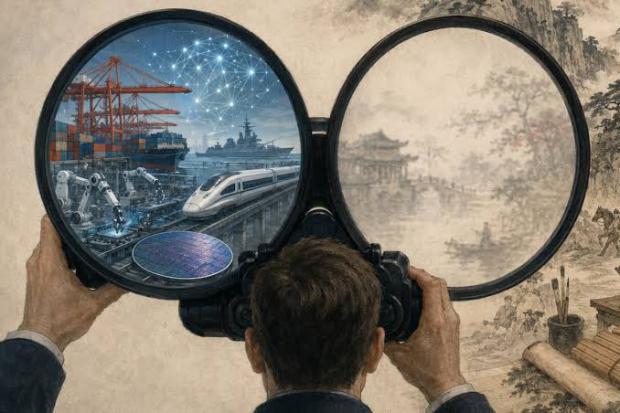
At their Beijing summit on May 14, 2026, Chinese President Xi Jinping asked US President Donald Trump whether China and the United States could avoid the "Thucydides Trap," in which rivalry between a rising power and an established one ends in war. During the talks, Xi also warned that mishandling Taiwan could bring the two countries into conflict.
The exchange captured the strategic anxiety of the present moment. China's rise is measured in factories, patents, artificial intelligence models, naval vessels, infrastructure projects and trade flows.
Governments and companies study its industrial policy, automated manufacturing and technological capabilities. Competitors want to discover the mechanisms of Chinese success; countries in the Global South want to adapt those that appear useful.