










Breaking News
 US interest expense on the national debt hit a record $1.4 trillion over the last 12 months.
 JD VANCE DECLARES THEY'RE ENDING THE DOLLAR AS RESERVE CURRENCY
 Commodities are making another move
 Rome never fell
Top Tech News
 Polaris injects pneumatic shifting into expedition-grade side-by-side
 NEW HOMES ARE BUILT WITH THIS AND IT'S MAKING YOU SICK
 S3E33: I Beat the Attorney General. No Lawyers. My Legal Team Was AI
 World's largest all-electric plane completes maiden flight
 The Lucid Cosmos Will Have More Range Than Any Tesla
 Strong 3D printable elastic polymer resists damage
 Double hydrogen-combustion car breaks world land speed record
 Vitalik Buterin Says Ethereum Is Betting Its Future On Quantum Security And AI
 Everything You Wanted To Know About Building A Cheap AI Setup (That Still Works)...
 If They Were Human, They'd Be Arrested. Experts Respond To Rogue AI Breaches



The extraordinary engineering that builds nature's only straight tusk
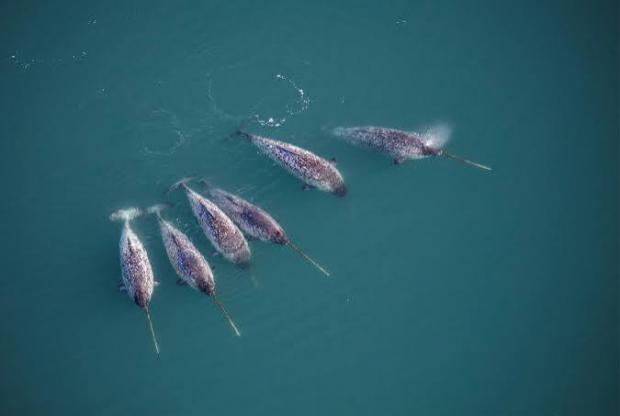
Now, scientists have cracked the code on how these elusive Arctic whales grow such an impressive and unique tool.
An international team of researchers, including scientists from Denmark's Aarhus University, have uncovered that these straight, spiraled tusks – which can grow to more than two meters (6.6 ft) over the whale's 80-plus years – are no fluke. There's a complex mix of physics and minerals involved in their formation.
Recently, we wrote about how, in nature, such features are loaded with an evolutionary cost – usually energy that could be allocated elsewhere. For narwhals, such energy could have otherwise been spent on more efficient fat storage or other metabolic functions to make life easier in their cold, harsh environment.